


Kimi Antonelli has become F1’s newest champion, just the 35th in the history of the sport. He is the first Italian since Alberto Ascari back in 1953 to achieve such a serendipitous feat. For a country known for motorsport, almost on par with football, food and romanticism, a 73-year wait seems improbable to some.
For those who know the history of the sport though, it is not much of a surprise. Since Ascari’s last title win, very few Italians have come into F1 and shown world champion potential.
Musso, Baghetti, Bandini, Scarfiotti, Brambilla, Patrese, de Angelis, Alboreto, Nannini, Fisichella and pTrulli. These are the names of Italian drivers to have won Grand Prix between Ascari’s title win on August 2, 1953 at the German Grand Prix to the debut of an 18-year-old by the name of Kimi Antonelli in March 2025 on the streets of Melbourne.
Whilst this seems to be a large list, it’s worth noting that there have been 70 Italians to have started a Grand Prix in that 71 year time frame.
Of all those names, only four finished inside the top three of a Formula One season. Those four are Musso, Patrese, de Angelis and Alboreto.
Of these four, I believe two had the potential to win a world championship. One was Musso, but the other was de Angelis.
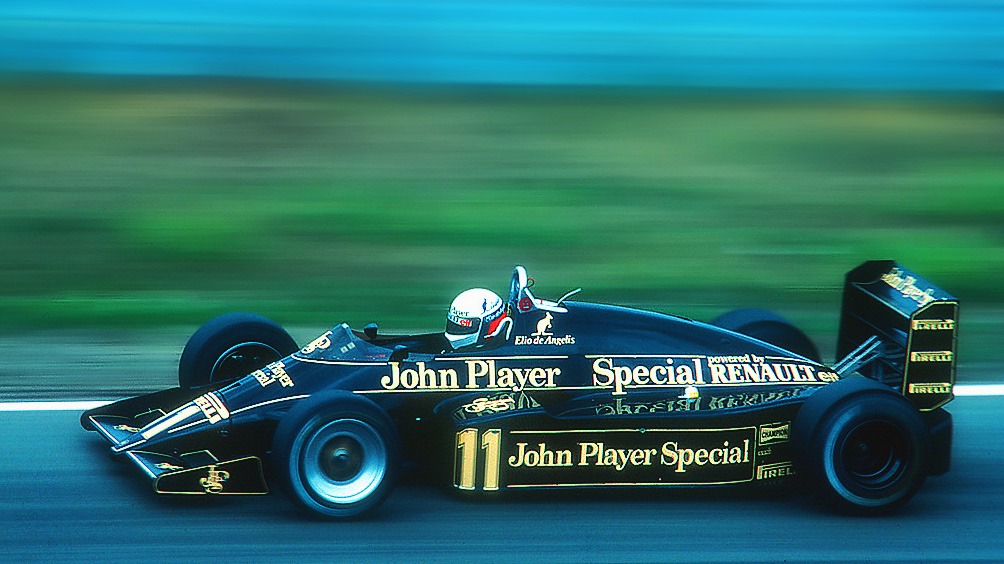
Elio de Angelis wasn’t just any driver. He took two Grand Prix victories in the 1980s and was seen as a world champion in the eyes of many.
De Angelis fitted the stereotype of a racing driver quite well: wealthy, attractive and multi-faceted.
He had a presence around him which was different to most others; a wise head on his shoulders, and a natural ability which hasn’t been seen from an Italian until Antonelli’s arrival.
Originally from Rome, de Angelis fit the part of a Roman well. Of any profession to go into, ‘racing driver’ perfectly encapsulated the traits of the ancient Roman Empire. Strong, powerful and with a yearning to learn.
His junior career was incredibly successful. In his debut season of single-seaters, he won Italian Formula Three in 1977, as well as the prestigious Monaco F3 support race in 1978. Around this time, none other than Enzo Ferrari had considered de Angelis, along with the likes of Alan Jones, Gilles Villeneuve, Patrick Tambay, Mario Andretti, Jody Scheckter and Eddie Cheever, to replace Niki Lauda at Ferrari when the Austrian left the Prancing Horse at the end of 1977. Villeneuve got the approval of ‘il commendatore’ in the end.
De Angelis got his F1 break in 1979, signing for the plucky Shadow team, who had scored just six points and finished 11th in the constructors’ the previous year.
He partnered a fellow rookie in Dutchman Jan Lammers. Motorsport journalist Matt Bishop noted retrospectively that:
“The media hype beforehand – such as there was any in 1979 – had centred much more heavily on Lammers, whose reputation had been burnished by F3 success and considerable Dutch excitement. Press coverage of de Angelis, by contrast, seemed subdued.
“Yet throughout that Buenos Aires weekend it was de Angelis who impressed. He outqualified Lammers by exactly one second, and in the race he drove with a composure and a maturity that immediately marked him out.”
And this would perfectly summarise de Angelis’ 1979 season. He beat Lammers in most metrics; standings finish, best finish and better qualifying head-to-head. The duo finished only four races together, with a 2-2 split, but de Angelis had a better average finish in those four races than Lammers. While the Shadow was a heavily uncompetitive car, de Angelis scored three points at the final round in the USA in the wet – the last points for Shadow in F1 – as well as a further two top ten finishes.
The wet weather performance impressed Lotus’ Colin Chapman, a man who had previously unearthed talents such as Graham Hill, Jim Clark and Emerson Fittipaldi to name a few.
So in 1980, de Angelis left Shadow and joined Lotus, a legendary outfit which previously housed the likes of Clark, Hill and Fittipaldi, as well as John Surtees, Jochen Rindt, Ronnie Peterson and Andretti, who would be his teammate in 1980.
Similarly to 1979, de Angelis comfortably beat Andretti. Whilst the qualifying head-to-head was 8-6 in de Angelis’ favour, he scored four points finishes and another three top tens compared to just one points finish and another three top tens for Andretti.
Andretti was no slouch either. Just two years earlier he had won the world championship.
De Angelis also made history at the second round in Brazil. At just 21 years, 10 months and one day, he became the youngest ever driver to score a Formula One podium, finishing second to Rene Arnoux and ahead of that year’s world champion Alan Jones in third.
De Angelis achieved a seventh in the drivers’ standings at the end of the season.
Andretti left and one champion was replaced by a future one, as Nigel Mansell became de Angelis’ new teammate.
In the duo’s first season as teammates in 1981, de Angelis beat Mansell 9-5 in qualifying and 3-1 in races they both finished.
Mansell scored one podium and another point in Spain, while the Roman hit double figures for the second season running and again finished inside the top ten of the standings in eighth with a fantastic eight points finishes, more than all but Jacques Laffite, Carlos Reutemann and champion Nelson Piquet.
At the start of 1982, de Angelis famously played the piano to entertain drivers during the FISA-FOCA war at the season-opening South African Grand Prix.
In the same year, he once again beat Mansell in head-to-heads and achieved the ultimate dream of winning a Formula One Grand Prix.
It was the Austrian Grand Prix, and de Angelis showed his class. After retirements to the Brabham and Renault drivers, de Angelis held off Keke Rosberg, who would win the title that year, to take his first win and Italy’s first since 1975, as well as the final win for Lotus under Colin Chapman’s leadership, the first for the team since 1978. Chapman died that December aged just 54.
The margin of victory was just 0.050 seconds, then the second closest in history and now the fourth closest. Coincidentally, the third closest was between two teammates of de Angelis when Ayrton Senna beat Mansell to victory in Spain in 1986. That too featured a Lotus beating a Williams.
1983 was de Angelis’ worst season in F1 by some margin. Expectations were high after a strong 1982, but he finished just two Grand Prix. Whilst he beat Mansell in all but three qualifying sessions that season, Mansell scored more points due to having more finishes than de Angelis.
A bounce-back came in the 1984 season, arguably the finest from de Angelis due to the Roman’s consistency, scoring points in 11 of the 16 races that season to finish third in the driver’s standings behind dominant McLaren duo Niki Lauda and Alain Prost. What made this feat so incredible was that he scored points on more occasions than any other driver, even Lauda and Prost.
Whilst no wins came, four podiums did in Brazil, San Marino and the American doubleheader of Dallas and Detroit.
However, the arrival of future world champion Ayrton Senna at Lotus in 1985 spelled the end of de Angelis’ time with the team. Senna’s talent was focused on, and de Angelis wanted to be a number one driver.
As well as this, Senna had convincingly beat de Angelis in qualifying head-to-heads and was five points ahead at the end of the season, the second time de Angelis was beaten by a teammate over a season in his Grand Prix career after Mansell beat de Angelis in 1983.
The then 27-year-old did take his second and final Grand Prix win in Imola when he gained from fuel issues for teammate Senna, as well as Ferrari’s Stefan Johansson, to initially finish second. Then, Prost was disqualified for an underweight car, gifting the victory to de Angelis in what was his second home race after the Italian Grand Prix at Monza.
De Angelis moved to the by-now struggling Brabham team to replace Nelson Piquet, who had gone to Williams after Keke Rosberg took the retiring Niki Lauda’s seat at McLaren.
His season at Brabham hadn’t begun well, scoring no points in the opening four rounds. Designer Gordon Murray trialled an infamous low-line design and the BMW engine in the Brabham had a tendency to blow up.
De Angelis was testing at Circuit Paul Ricard near Marseille a few days after the Monaco Grand Prix. He suffered a high speed crash due to a rear wing failure. Whilst the impact didn’t kill him – he had a broken collar bone – he became poisoned by smoke due to the car being on fire, as he couldn’t get out of the car.
Due to a lack of safety, marshals were not on hand to help until far too late, by which point Jones and Prost were there to try and free de Angelis. His condition got worse the longer he was stuck. He died of smoke inhalation 29 hours later in a hospital in Marseille aged just 28.
His death prompted safety changes in F1 around testing which made it mandatory to have a helicopter on the scene of any official test.
The death of de Angelis was also a factor in Charlie Whiting and Herbie Blash’s drive for motorsport safety, as Whiting and Blash had worked with de Angelis at Brabham.
De Angelis may not have had the statistics of a champion – a win percentage of less than two, nine podiums and 49 retirements, but his ability cannot be questioned.
In six seasons competing against drivers who were or would become world champions, he was better in four. The exceptions were 1983 and 1985. Beating world champion teammates Mario Andretti and Nigel Mansell is no mean feat, even if Andretti was unmotivated.
In an era with Prost, Senna, Mansell, Piquet and Rosberg, de Angelis competed against them and was competitive.
We’ll never know if Elio de Angelis ever became a Formula One champion, but from the evidence we have, it isn’t hard to imagine it.


