


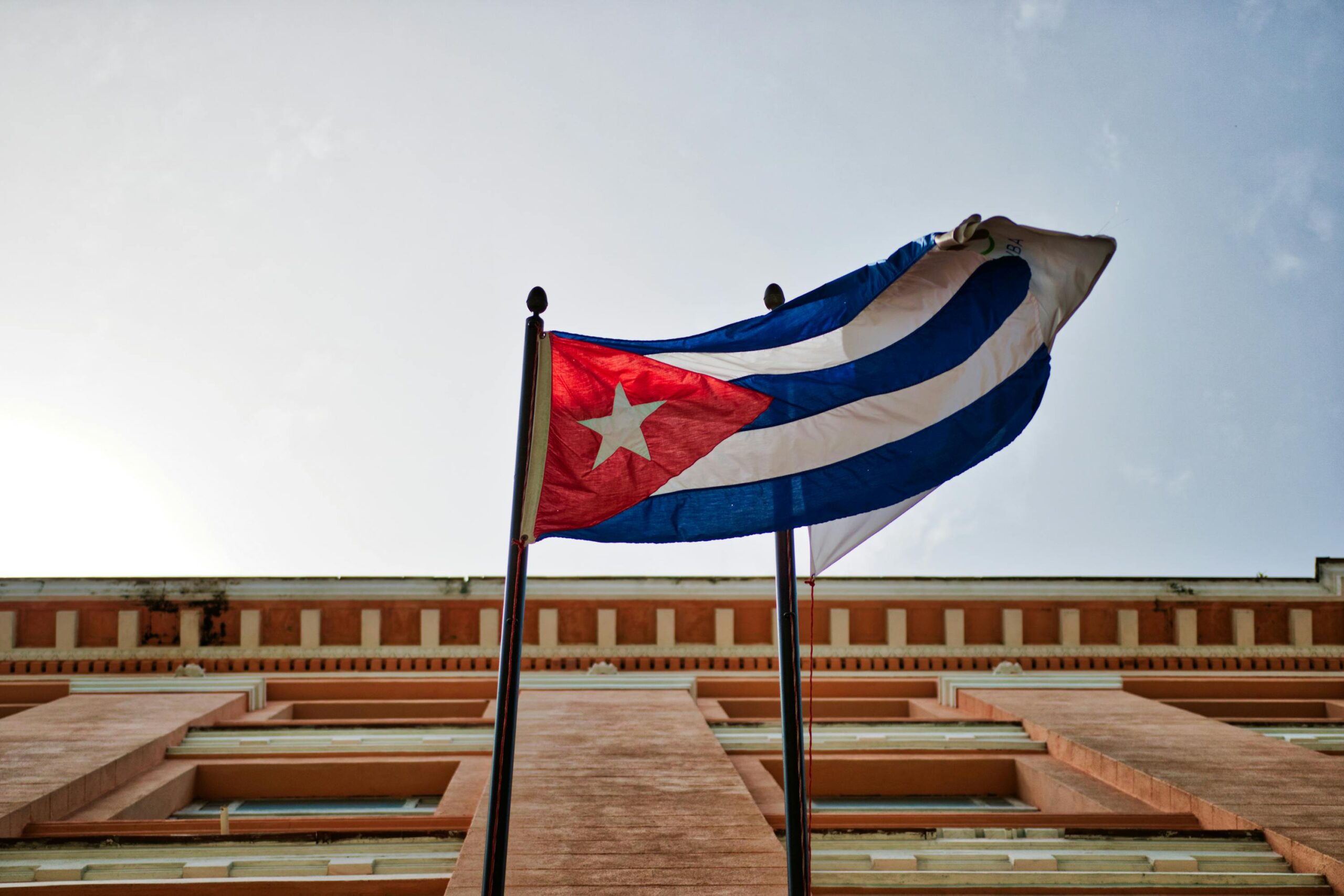
Cuba is one of five communist countries still remaining, with its government having lasted 67 years. Now, President Trump’s determination to implement regime change across the globe casts a shadow on Cuba. Following decades of fragility, these fresh tensions raise questions as to how much longer the communist rule can stand.
Since Fidel Castro and the Cuban Revolution overthrew the U.S.-backed Cuban leader Fulgencio Batista in 1959, the United States has continued to set out a series of measures in order to isolate the Caribbean nation economically and diplomatically. This decades-long series of trade embargos makes Cuba the longest country to be sanctioned by the United States.
Originally launching an arms embargo against Cuba in 1958, this was expanded to the country’s energy and agricultural sectors in 1960. The embargo prevents U.S businesses and citizens from conducting business and trading with Cuban Interests. According to the United Nations, the US trade embargo placed on Cuba has now cost the nation at least $130 billion in damages.
The island has now had critical supplies cut off by the Trump administration, including fuel and flights leaving intensive care units and emergency rooms without deliveries and the ability to store medication. It also means that the nation’s capital, Havana, has been plunged into an acute sanitation crisis. Without the ability to collect waste, the city faces a higher risk of disease particularly from mosquitoes.
But how did it get to this point and why is Donald Trump’s administration suddenly so interested in reigniting tensions between the two nations?
Cuban Revolution –
In 1952 Fulgencio Batista, then General Fulgencio Batista of the Cuban Constitutional Army, led a coup d’etat against the country’s President Carlos Prío Soccarás led to the formation of a new government under Batista on the 4th of April 1952. This coup overthrew democracy, seeing elections suspended and the start of dictatorship in Cuba. This leadership was backed by the United States who provided financial, logistical and military support to Batista’s government.
Fidel Castro began exploring ways to challenge the leadership from 1952, continuing his past of revolutionary and rebellious behaviour against governments in the region. Initially Castro attempted to challenge Batista’s coup through Cuban courts, however it was unsuccessful. On the 26th of July 1953, Fidel Castro alongside his brother and around 150 others attacked the Moncada military barracks in Santiago de Cuba in another unsuccessful attempt to overthrow Batista. He was then sentenced to 15 years in prison but released in 1955.
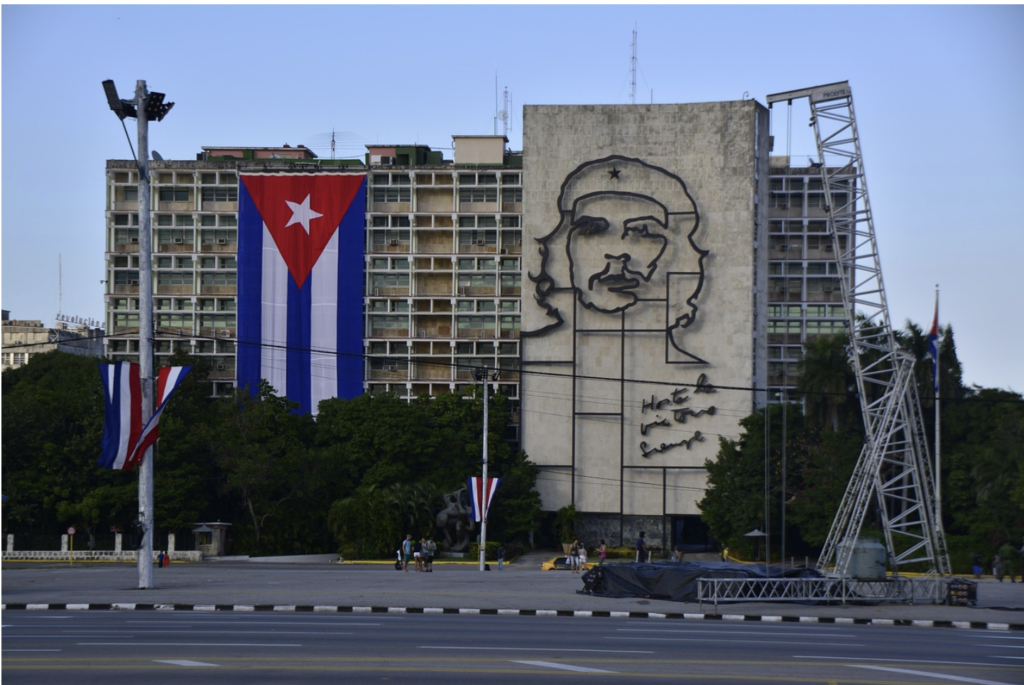
After being released as part of a general amnesty for political prisoners, Fidel and Raul Castro went into exile in Mexico leading to the meeting of the Castro’s and Argentine Marxist Revolutionary, Che Guevara. This group, combined with other Cuban exiles created the formation of a new guerrilla group.
Between 1957 and 1958, this group led a new campaign of guerrilla warfare from the Sierra Maestra Mountains on Cuba’s southeastern coast after fleeing from gunfire at the hand of Batista’s troops. This campaign led to Batista being overthrown by Castro’s forces in January 1959, and his takeover as prime minister from Manuel Urrutia in February 1959.
The beginning of the U.S. and Cuba’s poor relations –
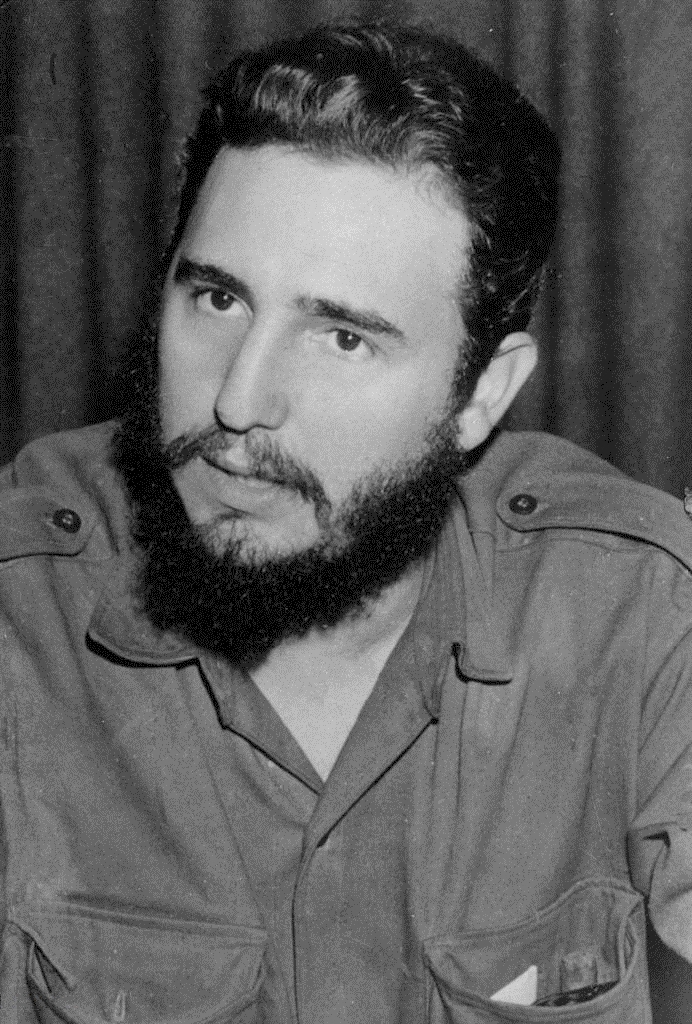
After Castro took over as prime minister, marking Communist rule in Cuba, he established formal diplomatic relations with the Soviet Union in 1960. These diplomatic relations included annual subsidies of around $5bn and included support in the nation’s military, healthcare and education systems. However, despite the United States recognising Castro’s government, Cuba’s relations with the Soviet Union mid Cold War led to the beginning of the U.S. isolation of Cuba.
This breakdown of diplomatic relations and the start of trade embargoes was initiated by the U.S. President Dwight D. Eisenhower who feared a Soviet foothold in the Caribbean. In January 1961, Eisenhower authorised the CIA’s ‘Bay of Pigs’ operation which saw the training of around 1,300 Cuban exiles to overthrow Castro’s government.
The operation took place in April 1961 and was unsuccessful, the ‘counter revolutionary’ survivors were captured and released in 1962 in exchange for food and medicine worth $53million.
Washington began imposing economic sanctions after Cuba’s trade with the Soviet Union increased and saw hiked taxes on U.S. imports and the nationalisation of American-owned properties such as oil refineries, banks and businesses. The U.S banned nearly all exports to the capital of Havana and was expanded to a full economic embargo and travel restrictions under President John F. Kennedy.
The Cuban Missile Crisis to Castro’s resignation –
During a visit to Cuba in May 1962, Soviet officials met with Fidel Castro to discuss the installation of Nuclear weapons in Cuba, this was discovered by the United States in October 1962 after aircraft surveillance in the area showed the instalments. This led to a 13-day political and military standoff between the United States and Soviet Union.
JFK and the U.S. Navy implemented a maritime quarantine on Cuba during this standoff, ensuring additional arms did not reach the island. The nuclear missiles were withdrawn after the Soviet Union received an agreement the U.S. would not invade Cuba. The Cuban Missile Crisis is considered the closest the Cold War came to being a nuclear war and also a turning point, with John F. Kennedy and Nikita Khrushchev making efforts to avoid this outcome.
Between 1961 and 1982, the travel ban from the U.S. to Cuba was only lifted once, under Jimmy Carter in 1977 and reinstated by Ronald Reagan. In 1994, it was announced by the U.S. President Bill Clinton that he would bring an end to the “open door” policy on Cuban refugees. This meant that Cubans intercepted at sea would be repatriated to Cuba, however, those who reached land would be allowed to stay in the states.
In 2006, it was announced that Fidel Castro was undergoing surgery and would temporarily be passing on power to his brother, Raul Castro. In February 2008, Fidel Castro’s resignation as president was announced, later revealing in 2011 that he stood down as head of the Communist party after falling ill in 2006.
Raul Castro then took over as president of Cuba on the 24th of February 2008.
Relations under the Obama administration –
During his 2008 presidential campaign, Barack Obama stated that the United States isolation of Cuba was only failing in advancing U.S. interests rather than achieving the goals set out by past administrations. He believed that it was the time to began pursuing diplomatic relations, with Fidel Castro writing in December 2008 that Cuba would be willing to talk with Obama’s administration.
Obama began making progress on these relations with the Castro regime from his first few weeks in office, easing restrictions on travel, allowing U.S. citizens to visit Cuba for religious and educational purposes, as well as allowing Cuban Americans to send remittances back to Cuba.
In 2014, Raul Castro and Barack Obama announced a full restoration to diplomatic ties, ending half a century of tension between the two nations. This came as a result of 18-months of mediation from Pope Francis, who had been working behind the scenes writing to the U.S. and Cuba urging both to partake in a prisoner exchange and improve ties.
The easing of restrictions continued throughout Barack Obama’s time in office and saw him become the first sitting U.S. president to visit Cuba since 1928. During his final days in 2017, Obama reversed Clinton’s reversal of the “open door” policy.
In April 2018, Raul Castro stood down as president of Cuba, announcing he believed presidential terms in the nation should not surpass two five-year terms. He was succeeded by Miguel Díaz-Canel and in 2019, continued to be critical of increased U.S sanctions against Cuba and Venezuela under President Donald Trump.
During the second year of his second term as U.S. President, Donald Trump has already set out for regime change in Venezuela and Iran. Secretary of State Marco Rubio has commented saying the United States “would love to see” regime change in Cuba as well. However, despite not settling on this operation just yet, Trump’s administration has already begun making their mark on the island.
Donald Trump declared Cuba “an unusual and extraordinary threat” to U.S. national security due to its relations with countries like Russia and Venezuela. His administration has also authorised tariffs in January 2026 on third-countries that sell or provide oil to Cuba.
The United Nations has condemned Donald Trump’s executive order imposing a fuel blockade on Cuba. Experts say, “The U.S. executive order imposing a fuel blockade on Cuba is a serious violation of international law and a grave threat to a democratic and equitable international order,” They also state that the classification of Cuba as an ‘extraordinary threat’ to the U.S. lacks credibility, accusing it of being “designed to justify the use of extraordinary and coercive powers” and a incompatible with international law.
The fuel blockade means that Cuba’s relationships with even its closest allies are being tested by the U.S. such as Venezuela and Mexico. Mexico’s President Claudia Sheinbaum has criticised Donald Trump’s administration for its sanctions on Cuba, warning of a “far-reaching humanitarian crisis” that we already see emerging. Despite such words, Sheinbaum has suspended oil shipments to Cuba but has, however, sent two Navy ships with aid from Mexico.
Cuba has expressed willingness to meet and negotiate with the United States for “meaningful” dialogue but draws the line at discussions surrounding changes to the government.
The country is already experiencing shortages to its energy supply as a result of past sanctions and embargo’s that have seen blackouts lasting up to 20 hours and an inability to refrigerate food and medical supplies. This also threatens Cuba’s water and sanitation systems, affecting hospitals, businesses and civilians.
The United Nations has also warned against the collective punishment of civilians as a breach of international law, going on to urge nations against following or recognising ‘coercive’ measures implemented on Cuba. It is hoped that by following such advice nations can take collective diplomatic action to achieve a settlement.


