


Disruptions to Ukraine’s Starlink and Starshield systems have sparked further tensions with the U.S. following a week of restricted defence and military operations.
On Friday 9th October, U.S. President Donald Trump announced a deal with Russian President Vladimir Putin to release 300,000 tonnes of diesel “to the American and global marketplace”. The announcement failed to address current sanctions imposed on Russia following the war in Ukraine, and the recent approval of fresh U.S. sanctions and tariffs on countries which import Russian oil and gas. The move has sparked criticism across America, including fellow Republicans over fears the move violates U.S. law.
Following the announcement, Ukrainian President Volodymyr Zelenskyy expressed deep concern over the move and for future deals the pair may make. Speaking at an EU summit in Brussels Zelenskyy told fellow European officials, “If i dont stand up to this..who else will?”. The tensions between Kyiv and Washington have been further intensified by restrictions to Ukraine’s access to Starlink and its military version Starshield, which began following Trump and Putin’s deal.
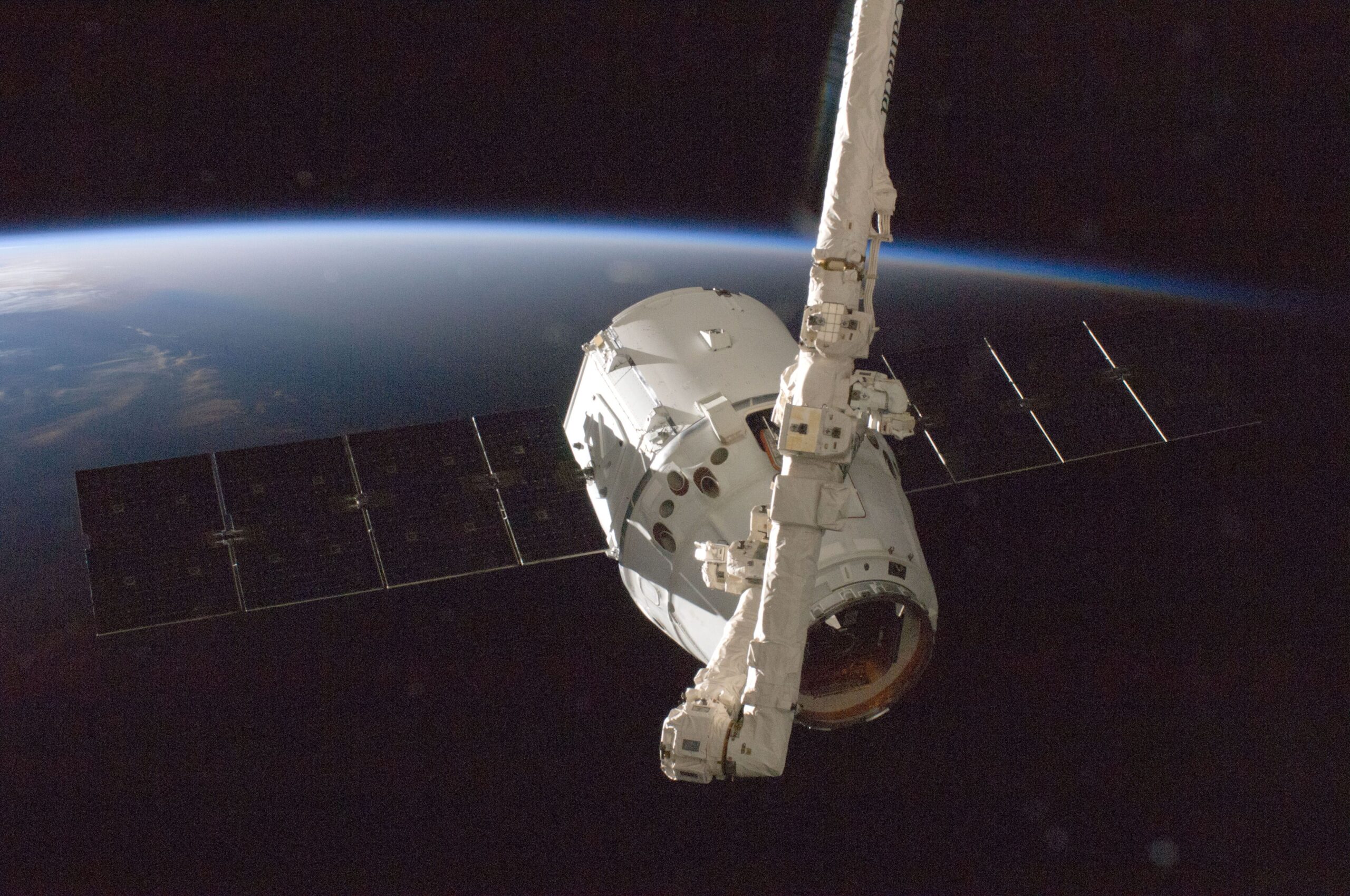
Starlink, a subsidiary of Elon Musk’s SpaceX, is a global telecommunications service providing broadband and internet services to an estimated 160 countries through a network of low Earth orbit satellites. The service and its subsidiary Starshield, have been heavily relied on for government and military communications throughout the Russo-Ukrainian war.
Starshield is described as a “secure satellite network for government entities” and for military purposes while Starink is designed for “consumer and commercial use”. Although lines are often blurred between the two causing confusion, SpaceX described the Starshield system as having a focus on delivering processed data directly to the user, providing assured global communications to governments with Starshield equipment and ‘building satellite buses to support the most demanding customer payload missions’.
On Tuesday 13th October, Ukraine’s military began experiencing and reporting issues with the Starlink satellite system, the military reported that the system, managed by the U.S. Government, was unable to work at speeds greater than 100mph with no prior warning from the States of issues with the programme.
The nation’s military uses Starlink receptors as part of an onboard guidance system for many of its drones, the system allows for Ukrainian mid-range drones to stay connected over longer distances and less susceptible to jamming compared to the use of standard radio networks.
Without a working Starlink system to support Starshield, the nation’s drones become essentially useless, as they are unable to maintain connection to follow Russian Shahed drones travelling at around 200mph, and carry out desired actions. Additionally, the SpaceX system allows Ukraine to protect civilians and civilian lives with warnings about incoming attacks and uphold communication between Ukrainian forces.
In February 2026, Elon Musk removed Russian forces’ access to the Starlink system giving Ukraine the slight upper hand in the war’s technological advancements. The move was made after evidence showed Russia using the system to carry out increasingly accurate and deadly attacks on Ukraine.
Why is new technology so vital in modern conflict?
Global conflicts have long relied on communications systems to carry critical messages, commands and contacting allies. Technology was advancing quickly throughout WW1 & WW2 meaning many of the communications methods used in the trenches were a world first, however, new technology at that time posed risk of enemy interception and troops relied heavily on typed letters and documents, telegraphs, runners and morse code.
The Starshield system offers extra security, using additional ‘high-assurance’ end-to-end user data encryption to meet ‘the most demanding government requirements’ and capabilities needed for military operations.
Contemporary wars are now fought on two battlefronts, advancing from land, air and sea to digital and orbital platforms. Attacks in the Russo-Ukrainian war no longer solely target civilian and government infrastructure and instead have seen growing demand for protection of communication networks and military satellites from attempts to further disrupt operations.
Technological battlefields involve targeted campaigns of weaponised social media usage, spreading vast misinformation through automated bots and algorithm manipulation in attempts to undermine public support and regain control of the narrative.
However, this new battlefront has also seen advancements in drone warfare and a reliance on unmanned systems, technology that relies on the Starlink/ Starshield systems to keep up with enemy advancements & provide awareness of incoming threats as seen in the Russo-Ukranian war.
Throughout October, Ukrainian drones struck a number of Russian data centres owned by the company Yandex, causing widespread payment and app use disruption. Since the attacks, Russian-linked accounts connected to disinformation and bot campaigns, messaging and commenting in online spaces have dropped by an estimated 84% in a single day, with social media users noticing a dramatic decline in Russian propaganda. However, BBC Verify stated experts have found no evidence such strikes have impacted Kremlin-linked bot networks.
Starlink’s history of interference in global politics –
Since operations in Ukraine were slowed, both SpaceX CEO Elon Musk and the U.S. President Donald Trump have publicly pointed at the other. Musk stated: “Starshield systems are owned and controlled by the US government. Any limits on speed or usage are decided by the US military and ultimately POTUS”.
Although systems have now been fully restored to prior speeds, neither Musk or the White House have acknowledged responsibility for blindsiding Ukraine. Speaking on Friday 23rd, the U.S. president stated that if the issue continued he would resolve it, despite over a week of disruption without intervention. U.S. Democrats are now demanding an “immediate, government-wide investigation into the decision to restrict SpaceX’s Starshield satellite-based intelligence and military support services in Ukraine” by the White House.
Allegations that Elon Musk has used Starlink to interfere in global politics aren’t new discussions. In 2024, reports emerged that the tech-trillionaire had been in discussion with Vladimir Putin since late 2022 including discussions that the Starlink system should not be activated in Taiwan in order to appease Chinese Communist Party General Secretary and leader, Xi Jinping amid tensions in Cross-strait relations. The company later asked Taiwanese manufacturers to relocate due to ‘geopolitical risks’ leading to questions from the Taiwanese government and public calls for a Tesla product boycott.
Following the 2024 presidential election, Starlink made headlines after false rumours spread online that Elon Musk’s Starlink technology was used to manipulate votes in swing states to favour Donald Trump given the pair’s close relationship.
The company’s involvement in political interference combined with the U.S. Government’s alleged ability to switch off access to the Starshield system without notice raises questions about the reliability of satellite systems in global conflict. Although the company has played a vital role in the Russo-Ukrainian conflict, proving the importance of such technology in modern warfare, it raises doubt over its future role in conflict if its users feel unsafe or uncomfortable with the power.


