


(Image credit – The Presidential Press and Information Office)
As the world continues to react to the escalating Middle Eastern conflict, Brent Crude Oil futures have climbed above $100 per barrel on Monday, for the first time since 2022. Global energy flows have been severely disrupted by the Strait of Hormuz closure, and benchmark futures on European natural gas have risen above €61/MWh.
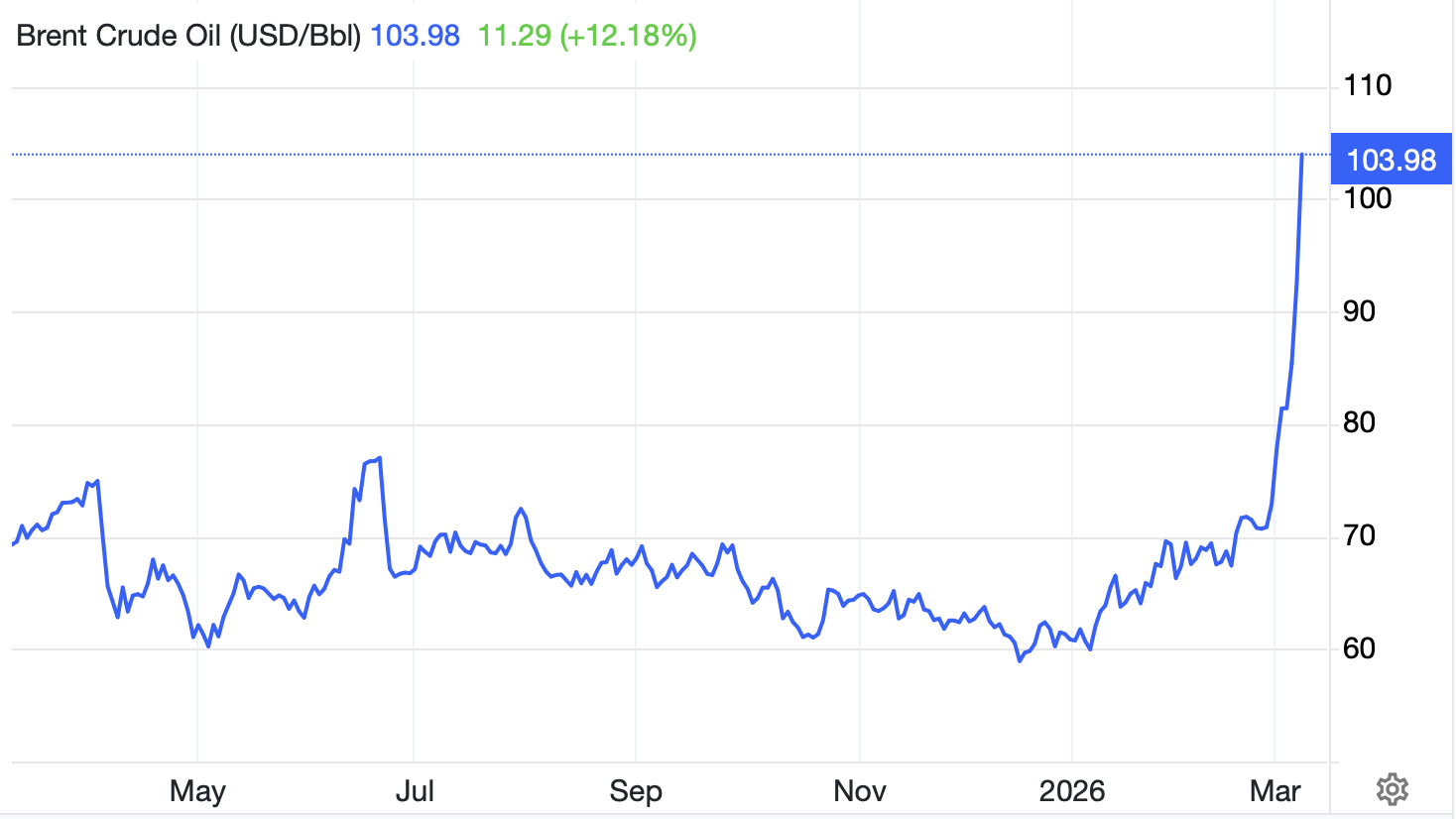
While Israel and Iran continue to exchange missiles, markets and analysts are watching out for two key elements: escalation and duration of the conflict. The duration is hard to predict, but neither Tehran, Washington nor Tel Aviv seem intent on backing down. The escalation is crystal clear, with both sides increasing their strikes and military action.
A robust European response has been absent, with Sanchez deciding Spain will stay out of the conflict, and Starmer allowing America to use British military bases in a defensive manner.
Russia may have been notably silent, but it certainly does have skin in the game. In an attempt to limit Russia’s position on the world stage, the EU is currently operating under a commitment, both politically and legally, to phase out Russian gas imports and reduce all dependence on Moscow.
However, with the geopolitical uncertainty and elevated market stress, smaller governments such as Hungary and Slovakia could raise concerns about their ability to maintain the agreed phase-out timeline. Their likely argument would highlight the affordability, geographic proximity, and reliability of Russian pipeline gas. This would raise the question of whether in a period of such global instability, it is financially prudent and in their nation’s best interests to continue with the restrictions.
Russia doesn’t only stand to benefit from natural gas limitations, but could also emerge as a reliable player in the oil market too. If primary oil flows from the Gulf Cooperation Council exporters to Asia continue to be interrupted, China will look for a stronger alternative. Venezuelan exports are out of the conversation, as these have already been constrained by US military actions.
Russia and China already have a practical working relationship, with China importing record volumes of Russian crude oil. The latest developments in the Middle East only strengthen Russia’s already advantageous position, and give the Kremlin scope to explore discounts and protect revenue to improve its fiscal position.
Against this backdrop, Russia benefits from this scenario without firing a single shot in the Gulf. A tighter LNG market strengthens the perceived value of residual Russian flows, and uncertainty in the global oil industry brings them back into a conversation they were excluded from.


