


Veteran UK political scientist and polls expert, Professor Sir John Curtice of Strathclyde University talked with Jamie Smith about the particularly turbulent week in politics from a sacking and a reshuffle on one side to a mass defying of the whip on the other. So how did it play out for the party leaders and how has this affected immediate polling as we move forward to the 2024 electoral year?
Mr Curtice, with this busy – and relatively turbulent – week in politics now behind us, who had a worse week, Mr Sunak or Mr Starmer?
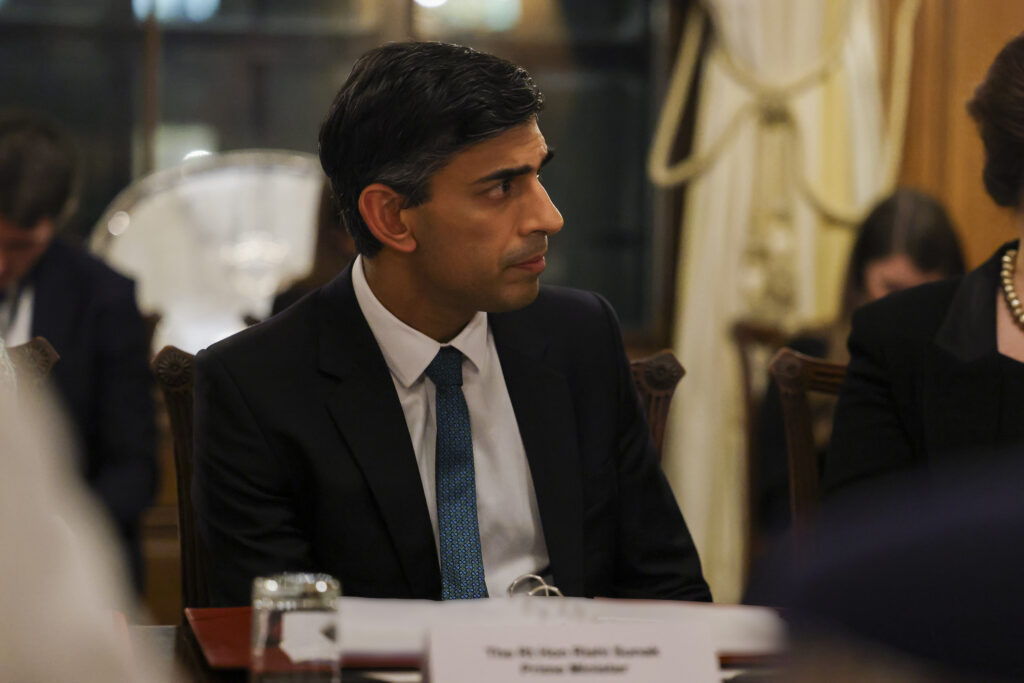
“Probably Mr. Sunak (…) The resignation letter from Suella Braverman was pretty incendiary; not least in revealing to the rest of the world that (…) there had been a written agreement between her and him, which was the basis of her being willing to back him in the leadership contest when he might have faced competition from Boris Johnson.
“Although there was a lot of interest and intrigue (…) through the appointment of Lord Cameron, which to some degree helped to reduce the impact of the sacking of Suella Braverman, I think it was overall relatively difficult for the Prime Minister.”
Talking earlier in the week to STV’s political editor, Colin Mackay, he said the comeback of Lord Cameron was a ‘bolt from the blue’. How do you think the reshuffle has played for the party, or will play for the party in the runup to the 2024 general elections?
“I think we need to distinguish two things. There’s the internal politics of the Conservative party and there’s the potential wider impact. In terms of party politics, what was in effect the exclusion of Suella Braverman, one of the chief champions of the cultural right of the party, and the in-effect replacement by Lord Cameron, who is undoubtedly relatively socially liberal on some of the so-called cultural issues did seemingly give the government a rather more liberal tone.
“Lord Cameron is after all the Prime Minister who introduced equal marriage. He’s also, by the way, much more concerned about the environment than Mr Sunak is known to be. There are those on the right of the Conservative party who are upset about Ms. Braverman being out and also upset about David Cameron being in.
“Some people may speculate, does this mean that Mr Sunak is trying to appeal to the more liberal end of Conservative support? Well, if he is, frankly, he’s going to be disappointed. For what it’s worth, we’ve had three polls conducted since the reshuffle. Actually, two of them have the Conservative party below 20%, and one just at 21%. But caution, caution: they’re all three polls from organisations that have tended to have the Conservative party somewhat lower than others. And I think we have to wait for a few more polls before we conclude, well, you know, has the Conservative position got even worse.
“At the end of the day, the problems that the Conservative party face are not to do with its ideological positioning, it’s much more to do with perceptions of its competence and its ethics.”
Historically, can a reshuffle in some ways actually help to reset the political climate for a given party, or not really?
“The last time this trick, if that’s the right word, was applied was when Gordon Brown brought back Lord Mandelson – again, somebody who wasn’t eligible to be a minister had to be brought into the House of Lords. And at that point, the Labour Party was about 12 or 13 points behind in the opinion polls. I think the Labour’s position improved by about one point by a month towards the end of the month of October in which Lord Mandelson was appointed. It didn’t fundamentally change the political weather.”
On the other side of the benches, it has also been a slightly tricky week, notably perhaps for Mr Starmer with the fallout over the vote on amendment for a ceasefire in Gaza in which we saw a number of Labour MPs rebel against the party line of an abstention. How do you think this has been perceived for Mr Starmer, or for the Party, and how might it play out in the immediate future?
“You can see the problem the Labour Party faces. Indeed, there’s an opinion poll out this week of people who profess to be Muslims. Over 60% of them saying that they are Labour supporters. Most voters, if you ask a question that is asking: ‘which side do you sympathise with, the Israeli side of the Palestinian side more,’ most voters say either: ‘both equally,’ or ‘I don’t know.’ And that’s true of both conservative and Labour voters.

“But amongst the minority who do express a side, as it were, amongst Conservative voters, they are quite heavily pro-Israeli and on the Labour side, they are quite heavily pro-Palestinian. And the MPs who have rebelled are the people like Jess Philipps with quite substantial Muslim communities in their constituency, or they are Muslim MPs themselves.
“If anything, Labour’s lead, even before this week, was lengthening somewhat over the Conservatives. And it may well be that in the end, people will accept this as a bit of an honest disagreement and won’t be immediately saying: ‘oh, the Labour Party is deeply is deeply divided.’
“On the other hand, whether Sir Kier is right in saying: ‘I’m demonstrating now how robust I’m going to be as Prime Minister,’ well, sure, the Labour Party had an antisemitism issue to deal with – whether or not this necessarily translates into the Labour Party demonstrating that it’s also willing to defend Israel’s interest in these circumstances. There’s a question mark there. And, you know, whether or not people in the end will necessarily think any more of Sir Kier Starmer because of the stance he’s taken, I’m not sure I would necessarily want to bank on that expectation of I were him.”
Is Sir Kier Starmer the UK’s next Prime Minster?
“There is little doubt that he is odds on favourite and the odds keep on getting shorter to be our next Prime Minister. As we get closer to election day, without any discernible progress by the Conservatives. Labour don’t even need to win the next election – they just have to stop the Conservatives getting too close to 326. It’s an asymmetric contest.”


