


Sport, watching and participating, has always been popular. It’s been happening since the beginning of time, with cave paintings from 15,000 years ago depicting sprinting, swimming and wrestling.
Despite this, there is still a battle for equality within the space.
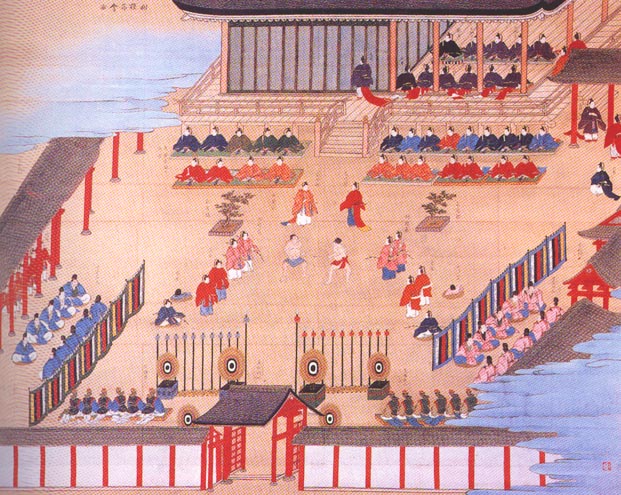
Within the last century, women and their allies have been fighting to be allowed the same platform as men in sport.
How did we get here?
Let’s take a look back into the history of women in sport.
The Olympics are an ancient sporting event, but the modern games officially started in 1896 under the International Olympic Committee (IOC). Women were allowed to compete in the second rendition of the games in 1900, but only in three sports – lawn tennis, sailing, and golf. This was out of 19 other sports that were occurring.
The great game of football has been played since the dark ages, but it is only within recent years that women have been officially allowed to play. In 1921, women were banned from playing by the Football Association (FA). They stated, “the game of football is quite unsuitable for females and ought not to be encouraged”.
It is often said that the ban was seemingly caused by the jealousy of the popularity of the women’s game, with it often exceeding the men’s.
This continued until societal change in the 1960s started to shift people’s perception of this rule.
In 1969, 44 club representatives attended the first meeting of the Women’s Football Association (WFA), governing the sport within England. The FA’s ban on women’s football was repealed 50 years later in 1970, and the Women’s FA Cup came quickly after in 1971.
“sports media reflects society.”
Finally, it was only in 1972 when women were officially allowed to compete in marathons.
These restrictions compounded and halted the development of women in sport. The effects of which can still be seen today despite the progress that has been made.
Because of the 50 year ban, women’s football doesn’t have the same infrastructure and legacy of the men’s game, hindering the youth pipeline and the institutional development that their counterparts have had decades to race ahead.
Just the fact that there were not the same opportunities for both men and women caused sexist ideas to solidify and still hold back athletes today. As it wasn’t commonplace to see women competing in the same sports and levels as men, the idea that they are weaker and less capable grew arms and legs. These values are still rooted in a lot of viewers’ beliefs to this today.
Let’s focus on a small but mighty section of the issue, language.
Language defines how we interpret a situation, and it can easily influence others into the same pattern of thinking.

In this sense, inequality is perpetuated by the language that surrounds it. Phrases like “If you haven’t got the balls for it, there’s a women’s team you can play on” are still in use. Along with many other phrases, it is clear to see that masculine traits are clearly favoured, with femininity being looked down upon.
When talking about men’s sport, the game is the default. You rarely hear ‘Mens football’, but it is common to hear ‘Womens football’. It is almost a micro aggression, implying that women aren’t good enough to play the main game, so are in the ‘lesser’ category.
When we refer to female sportspeople as ‘girls’, massive implications are made. While this may seem harmless on the surface level, it creates a huge pile of connotations that negatively impact the point of view. Academics have noted that commentators still use the word ‘girls’ for female athletes regardless of their age, but they would hardly refer to male athletes as ‘boys’.
This is a wider issue within society, the infantilisation of women. That could be an entire article by itself, but in wider culture, youth has always been seen as desirable.
“It is an incredible phenomenon by which our society systemically equate femininity with things like vulnerability, submission, uncertainty, and childhood. To be womanly today is to be, in many senses, infantile” – Sut Jhally
Sticking with word association, a 2016 study by the University of Cambridge found that men are seen to have a competitive edge in sport, with male athletes associated with the words “fastest,” “strong,” “beat,” “win,” and “dominate.” Meanwhile, female athletes were associated with the words “aged,” “pregnant,” “married,” “compete,” “participate” and “strive.”
The study also found that women disproportionally faced comments on their clothes, appearance, and personal lives.
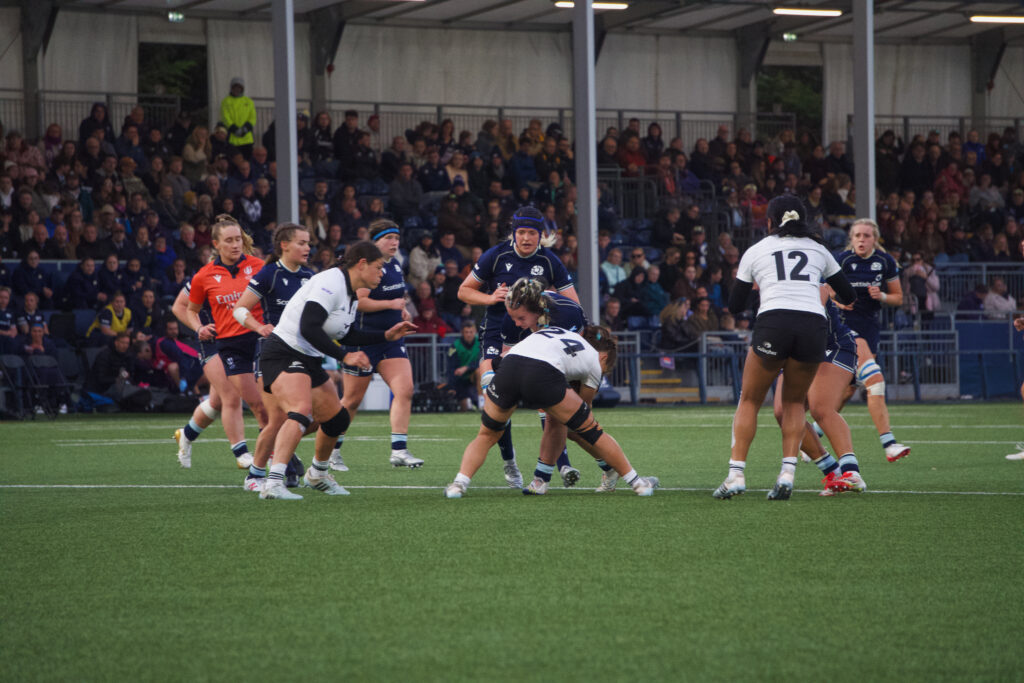
During the football World Cup play offs in Wales earlier this year, commentator and former international Nina Jones faced hundreds of abusive comments for doing her job. While there was a large group who rallied behind to support her, she also faced comments such as, “women are taking over every sports channel, they are presenting every sport there is, now we have listen to the uninformed screeching in our sport.”
This isn’t an isolated issue, with other sportspeople like former England defender Alex Scott, F1’s Naomi Schiff, and Lee Mackenzie being just a few others who have faced similar abuse.

There have been initiatives to change the language surrounding sports, however they have not all been successful.
Ahead of the 2020 Tokyo Olympics, new guidelines were introduced surrounding the integrity of the commentary. Despite this, even the IOC’s new gender equality adviser, former Olympic swimmer Naoko Imoto, said that her home country was failing in applying them. She said, “Many of the channels look at female athletes as ‘female’ or ‘girls’ or ‘wives’ or ‘mothers’ and not really as pure athletes,”.
Much of it is to do with the general culture of the world. Professor Toni Bruce, an expert in the sociology of sport at the University of Auckland told CNN: “I think sports media reflects society. So as society changes, then sports media changes, but it’s often running behind the change – not necessarily leading it.”
Granted, all sportspeople are on a better social standing than they were even 30 years ago, but there is still room to improve. Just because it is better than it was, doesn’t mean we should stop there. By fixing the language surrounding women in sports, another step is taken towards true equity.


