


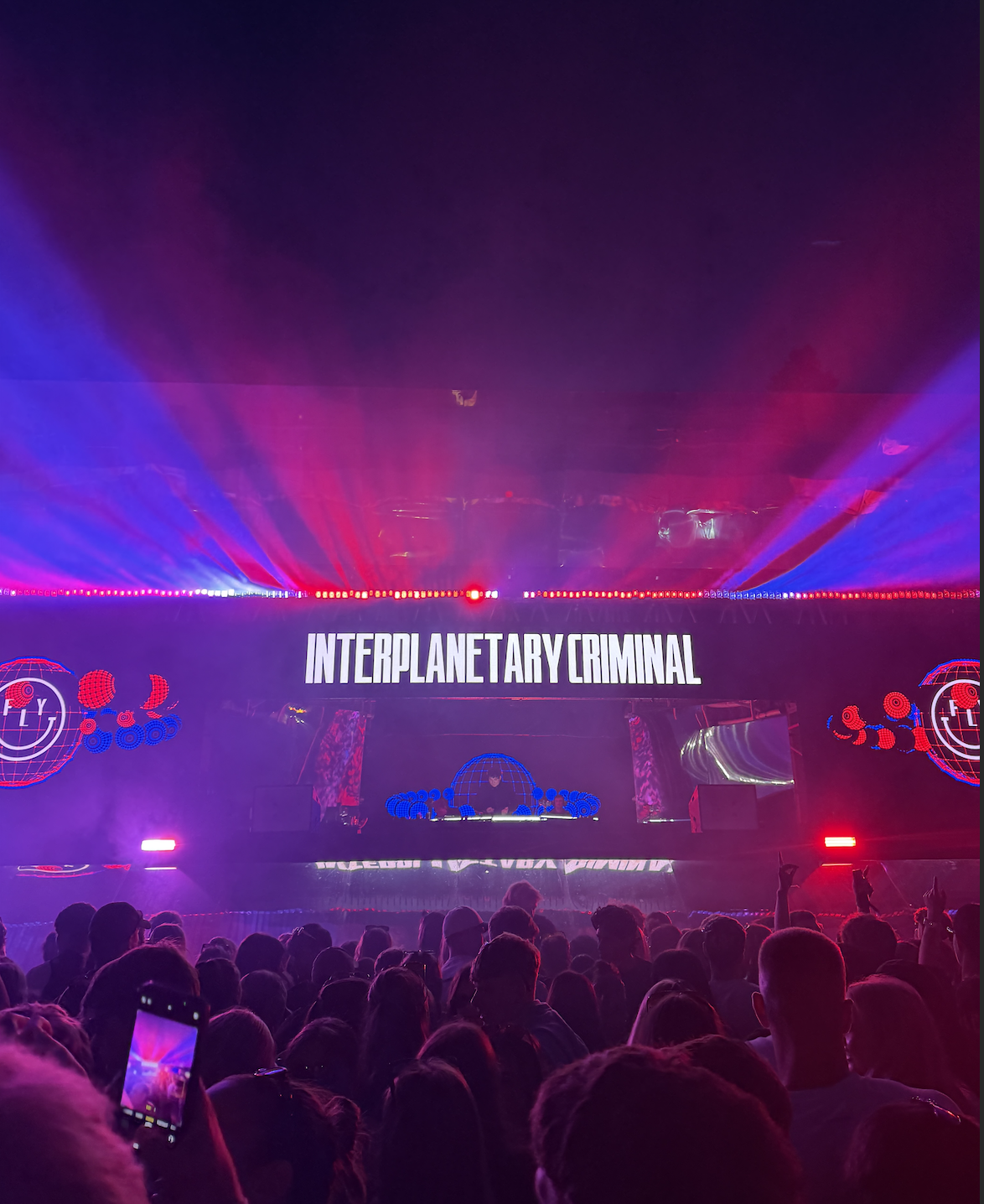
Fly Club party, one of Scotland’s leading dance music collectives, has just come off a fantastic year. Hosting Sammy Virji, IPC and Josh Baker, Chris Stassy and some of the biggest house DJs going right now; it seems like they are on a winning streak. There has been a huge rise in underage individuals sneaking in, which has been putting people off attending – claiming house raves now lack authenticity. At Fly Open Air, in Princess Street Gardens, hundreds of pre-teen children were seen breaking in and running into the venue; the likes of this have also been seen at festivals like Creamfields. BBC reported that out of the hundreds of under 18s who broke into the Edinburgh festival, Police Scotland have confirmed that they arrested and charged three individuals who were aged 12, 15 and 17.

In footage captured by Breaking News and Crime in Edinburgh, 20 or more young individuals are seen and caught placing a ladder on the fence at Terminal V festival and, one by one, climbing over into the festival grounds. They appeared to face no challenge or intervention from security staff.
Fly is introducing a new concept called Dreams, it’s for over-21s, with a no phones on the dancefloor policy. This has received positive feedback from older audiences, as the exponential rise in house music this past year has brought in an unfamiliar and commercialised crowd.
The lineup consists of DJ Waff, the Yorkshire born DJ, who has done everything from Burning Man, Glastonbury and Ibiza residencies, will be coming to Cabvol on the 13th of November. He will be joined by Gasoline Dance Machine and Keiran Apter, who are both Edinburgh Based.
The recent rise of house music among young people in Scotland represents both the continuation and commercialisation of an established rave tradition. Events like FLY have helped make Scottish house music accessible to a much larger audience, but this expansion can also dilute the unspoken rules and values associated with traditional rave culture. As an influx of people enter the scene through social media and large commercial events rather than through smaller clubs and underground parties. Some newcomers seem to treat a rave primarily as a social spectacle rather than a shared musical space. The resulting frustration over behaviour, personal space and respect are less about young people and age but more so the effect of an underground culture becoming mainstream.
It also deals with the relationship between social media and the commercialisation of rave culture. Platforms such as TikTok and Instagram can make events like FLY extremely visible, which is useful for promoters but can also turn nightlife into something that people consume visually before they have even experienced it. A no-phone event temporarily removes that layer.
In this sense, Dreams could be viewed as an attempt to recreate some of the qualities associated with older rave culture like being present, respecting the people around you, and hearing new music that you didn’t discover on TikTok.
It is also important to note that this doesn’t mean that FLY is rejecting their younger audience. Instead, it provides a different environment within a wider FLY audience. Younger audiences are still able to participate and are welcomed in the broader house scene, whilst Dreams creates a more controlled and mature environment for people who want a different type of night but still enjoy the events that FLY provide.
Ultimately, Dreams represents an interesting response to the recent commercialisation of house music, raves and festivals. FLY has helped bring house music to a large mainstream audience, but a concept like Dreams suggests that there is still demand for something more intimate, immersive and culturally focused.
The irony is that commercial success may have created the need for spaces that deliberately distance themselves from some aspects of commercial rave culture. Dreams can be interpreted as an attempt to preserve the communal, purely music focused side of Scottish rave culture while still operating within a much larger and more commercial contemporary scene.


