


The date is October 6th, 2025.
UEFA accept La Liga’s formal request to have Catalonian giants FC Barcelona face Villarreal away in Miami on the 20th of December.
Regarded by many as Florida’s hotspot for sprawling beaches, vibrant nightlife, and close ties to Latin American culture, it’d be a no brainer to hold sporting events there.
Its local football team, Inter Miami, are enjoying one of their most successful seasons and boasts a star-studded line-up, mostly courtesy of the legendary Lionel Messi. The Hard Rock Stadium hosts NFL side Miami Dolphins, and will be used as a football pitch for the FIFA World Cup next summer.
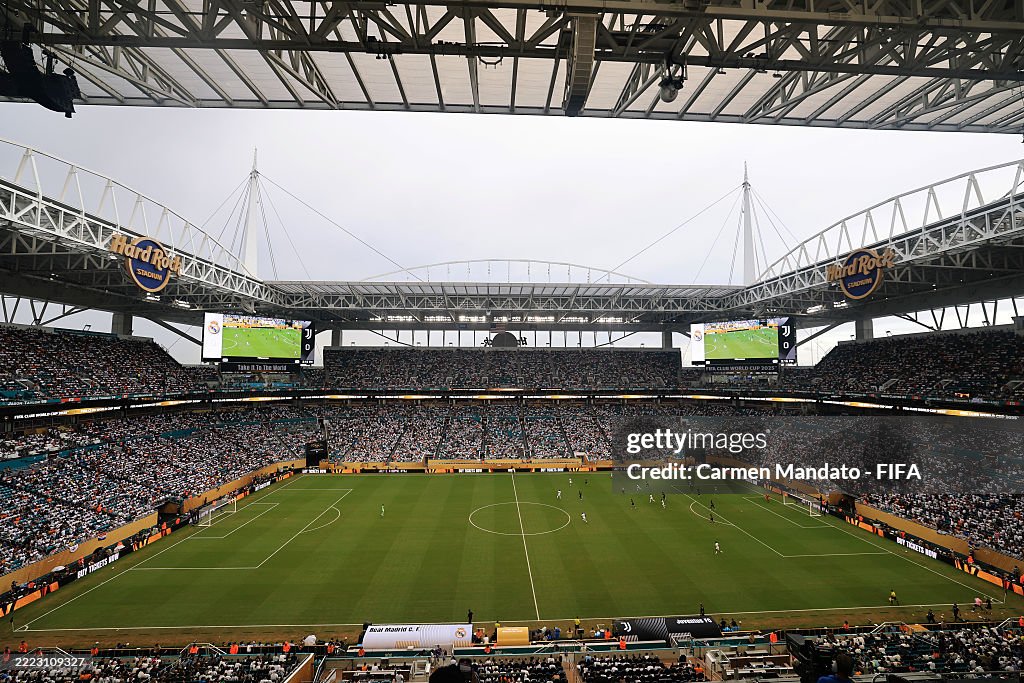
Arguably, the most notable thing about Miami is the fact that it isn’t in Spain!
One of the longest running football leagues in the world, La Liga’s fame is undoubtedly global. It’s home to the two biggest clubs in the world, Real Madrid and the previously mentioned Barcelona – and they are a driving force on the European stage. Since the league’s creation in 1929, no other country in Europe has seen its teams claim more European trophies than Spain has (67).
Barcelona and Villarreal have, rather unsurprisingly contributed to that number. La Blaugrana have lifted the coveted UEFA Champions League on five separate occasions, most recently in 2015.
Villarreal claimed their first piece of continental silverware in 2021 after beating Manchester United on penalties in Gdańsk, lifting the Europa League on a historic night for The Yellow Submarine.
La Liga also has the fourth highest average match attendance in world football. So why would La Liga and UEFA decide that two established club sides with passionate support in Eastern Spain needs to be played 4,602 miles away at a neutral venue?
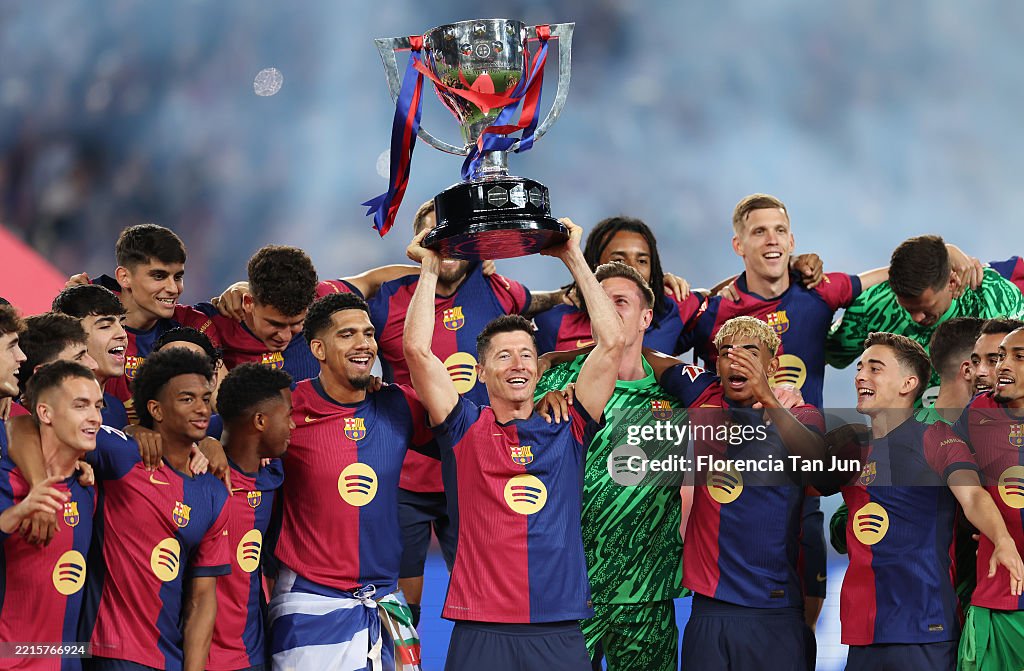
Of course, the simple answer is brand exposure. Barcelona are massive. A household name to people who’d never even think of putting a game of football on. People know who Lionel Messi is regardless of if they have any interest in the beautiful game. It’s estimated that they have around 400 million fans globally.
Barcelona President Joan Laporta (as would be expected from the man at the helm of the biggest franchise in world sport) was more than happy to oblige.
“We are looking forward to reconnecting with all our fans in the United States and are grateful to LALIGA for the opportunity to get closer to one of the Club’s key strategic markets. We have been visiting the country for many years and have always felt the passion that FC Barcelona inspires.”
“As a global club with millions of supporters around the world, this opportunity strengthens our commitment to our international fan base — especially in a key market like the U.S. An official match in a city like Miami, with such a strong Barça community, will undoubtedly be a great spectacle featuring two teams competing at the highest level.” [ESPN]
Needless to say, Mr Laporta won’t care for the extortionate prices that will likely be charged. Why should he, when the generated revenue will fund Lamine Yamal’s wages?
UEFA’s reservations will hardly console the fans who could well be priced out of a trip to Florida this winter. It’d be comically easy to say that it’s only one game out of 380. Nobody would have the cheek, would they?
Well, La Liga themselves certainly would.
Javier Tebas, president of La Liga, was swift to brag, claiming that this would “take La Liga and Spanish football to an all-new level.”
If that level is moving continents, then I suppose he has a point.
Tebas went on to say that his league should give everyone the chance to see their favourite club outfits.
“La Liga represents millions of fans around the world, including many who follow their teams passionately and deserve to see their team live at least once.” [ESPN]
Villarreal, as good as they have been in recent years, could only dream of being the size of Barcelona. The entire game seems awfully tailored to one particular fanbase. Finding a yellow shirt in the inevitable waves of red and blue would be like finding a needle in a haystack.
It’s worth noting that the game being moved would have been a home fixture for Villarreal. The Estadio de la Cerámica has become a fortress – under the vision of head coach Marcelino Garcia, Villarreal are unbeaten at home this season. They haven’t lost there since March, and that was against Real Madrid courtesy of two goals from an in-form Kylian Mbappé. Runs like that are not flukes.

Even Barcelona’s stars aren’t pleased. Netherlands international Frenkie de Jong wasn’t afraid to be critical of the situation and was more than happy to sympathise with the fans opposing the trip to the states.
“I wouldn’t do it. It’s not good for the players – you have to travel a lot. It’s also not fair in terms of competition. For us, it’s now an away match on neutral ground.” [Sky Sports]
Of course, football is played on grass and not paper. The game may well have gone ahead in Plana Baixa and Barcelona, hypothetically, could have swept the hosts aside. They came out as 5-1 winners in that fixture last season, after all.
The main fear of the millions of football fans around Europe is that their teams could be ripped away to play elsewhere for no reason other than revenue. Football is getting more and more expensive for its average viewer – given that it has always been the “working man’s” sport, throwing on the cost of a flight across the Atlantic to see Manchester United play West Ham simply isn’t worth it.
UEFA were swift to try and shake off some heat by labelling their decision as “regrettable” and that this game would be a one-off.
But if this decision was so foul, so abhorrent in their eyes, why go through with it?
Again, money is the answer. It seems to make the world go around. Prices have been rising in every aspect of the ferocious industry that football has become. Even the FIFA World Cup hosts must firstly place an extortionate bid before voting begins.
And those decisions have been nothing short of erratic at times. The 2022 Qatar World Cup may have provided fantastic entertainment value, but its human rights laws deterred many fans from travelling and hundreds of workers died building its stadiums in sub-par conditions. The tournament had to be played over December to prevent players from suffering heatstroke, as opposed to the usual summer slot.
Russia had been the hosts four years prior to that, and spread more than enough fear due to the attitude towards the LGBTQIA+ community in wider society and numerous incidents of racism within Russian football itself.
Now the USA – who have been the talking point of the world over the last year – are in the footballing spotlight. The Club World Cup was hosted there over the summer, they co-host the World Cup next year alongside neighbours Mexico and Canada and now they hold a game of La Liga football.
The cheapest tickets to Barcelona vs Villarreal cost $762 (£570.63). For a game of football, regardless of the location, or the teams playing, that is frankly obscene.
Of course, it’s clearly not obscene enough for some, as tickets are selling out rapidly. And therein lies the problem. People are so determined, or perhaps so desperate, to see high level football, that there seems to be no price too high.
The demand is there. And if there’s money to be stuffed into pockets, Europe’s money-hungry football powerhouses won’t hesitate to scoop it up.
Dark times are ahead for football fans. It seems that this is the beginning of a massive change in the culture of the game. It leaves far too many questions unanswered, far too many fans set to be priced-out, and not nearly enough emphasis is made on what football has historically been.
Football centres around local communities banding around a group of talented individuals and sharing that feeling of hope, belief, joy, despair. No matter who those people walking through the turnstiles are, what they do for work, where they come from – they hold that same love for the game. Football is on course to lose its fundamentals.
The culture of the game isn’t evolving, per se. It’s dying.
Fans of any sport – especially football – are stubborn beings, however, and don’t shy from making their opinions heard. The proposed European Super League sparked outrage like no other back in 2021 and fans who really should have been self-isolating took to the streets in their thousands. The message was exceedingly clear.
Football is for the fans. Football without fans is nothing.
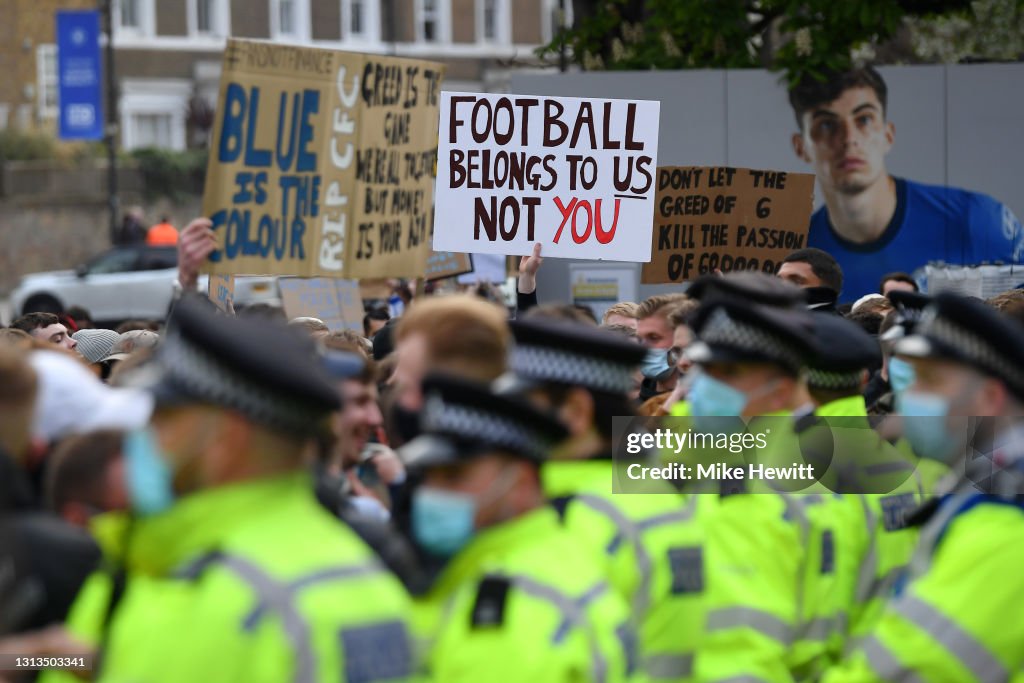
Its core cannot be stripped away, and although football has absolutely become a franchise and a business model in the last ten to fifteen years, it truly belongs to the people who give up their Saturday afternoon for a win, loss or draw. That is what money, trips abroad, and ridiculous rearrangements will never be able to buy.
Only time will tell if UEFA will be loyal to their own word.


