


A dystopian novel depicts a futuristic, imagined society that is often frightening, oppressive, and dehumanising, serving as a warning about current societal trends. A classic example would be George Orwell’s ‘1984’, however, a less traditional author, Kazuo Ishiguro, may have outdone even him with his skilful use of setting and character to incorporate themes of dystopia in his myriad fictional worlds.
My first introduction to Ishiguro’s work was through his world-renowned novel, ‘Never Let Me Go’ – a dystopian story about clones raised in sheltered boarding schools for the sole purpose of organ donation. The “idyllic” setting of these schools hides the chilling truth about dehumanisation and societal complicity in cruelty. While a brilliant book, it was a little depressing in comparison to my usual interests, and as a result, I didn’t pick up another book of Ishiguro’s until a few years later.

I’m not sure what first attracted me to the book ‘Klara and the Sun’. Maybe it was the bright colour of the cover or the light-hearted title, but despite my premonitions about Ishiguro’s writing style, I decided to give it a go. ‘Klara and the Sun’, Ishiguro’s eighth novel, is also a dystopian science fiction story. Set in the U.S. somewhere in the future, the story focuses on the advancement of AI and genetic modification, in particular, a risky and expensive procedure called “lifting” (genetic enhancement to boost intelligence). This procedure created social divides and sometimes caused illness, as seen through the eyes of Klara, an observant “Artificial Friend” serving as a companion for a sick girl named Josie.
Although this book is less violent than ‘Never Let Me Go’, its dystopia lies in a world fractured by extreme class division that prioritises the elite, and the widespread issue of AI replacing human jobs. This leads to profound loneliness and an existence where the privileged treat “unlifted” individuals and advanced AI (like Klara) as inferior.
In both novels, Ishiguro skilfully makes the reader reflect on their own reality and the future they are creating. The main difference between these books however lies in their endings. While the former novel is unbearably sad, ‘Klara and the Sun’ left me in a more positive frame of mind. This piece of literature offers glimmers of hope through forgiveness, enduring love, and the idea that meaning can be found in connection. In the end our narrator, Klara, is content and finds peace in her memories with Josie.
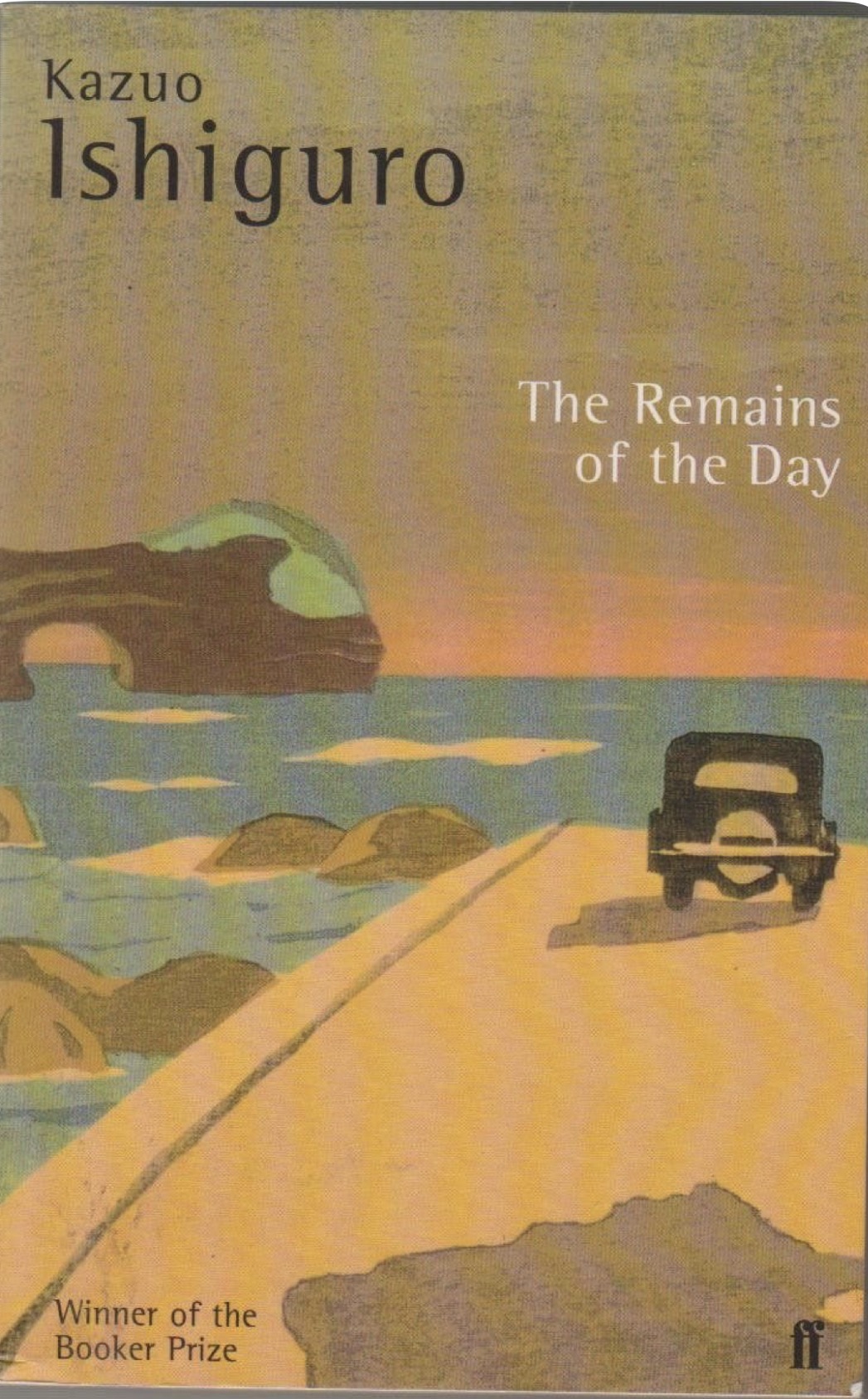
The third book I read, called ‘The Remains of the Day’, is a starkly different story to the previous two. This book follows the character Stevens, an aging butler in 1956, who takes a road trip through England and during so, reflects on his decades of devoted service at Darlington Hall. It delves into the nature of what makes a ‘great’ butler, the search for dignity, and the realisation that his life may have been dedicated to a ‘flawed cause’ where the master that he served lay on the wrong side of political history.
This novel is a piece of historical fiction, focusing on social change in post-war England. Though it shares themes with dystopian fiction through its critique of rigid systems and lost potential, unlike Ishiguro’s other works, this novel focuses on the internal world of its butler narrator Stevens, who offers a subtle critique of class and duty, rather than futuristic oppression.
The fourth and most recent book I have read by Ishiguro, is ‘The Buried Giant’. This book is a fantasy novel set in a Britian just after King Arthur’s rule. The narration follows an elderly couple, Axl and Beatrice, as they travel to see their long-lost son. On their travels they come across knights, dragons, and ogres – a stark departure from Ishiguro’s realistic or sci-fi settings. However, this novel still follows various dystopian themes, such as widespread imposed memory loss (the “mist”) as it controls the population. This form of societal control, often dehumanising, is a classic tool in dystopian fiction as it strips individuality to maintain an illusion of utopia. Another example is its metaphorical relevance, with the themes of suppressed history from King Arthur’s reign feeling very relevant to modern political anxieties.
Stylistically, Ishiguro is known for his restrained and subtle approach to storytelling. His narrators often speak in an understated, almost formal manner, even when confronting harsh emotional truths. This highlights his skill in writing stories with an underlying meaning without engaging with it directly, leaving us, the readers, to understand what is deliberately left unsaid.


