


ITV’s latest seven-part series The Hack, first released on the 24th September 2025 and written by Adolescence writer, Jack Throne, is the true, while also fictionalised, story of the News of The World phone hacking scandal and the linked investigation into the unsolved murder of private investigator, Daniel Morgan.
This true-crime series set between 2002 and 2012, follows Nick Davies (played by David Tennant) a British freelance/ investigative journalist as he uncovers the extent of Rupert Murdoch’s News of The World phone hacking scandal across the 90s and 2000s. The former best-selling Sunday paper, previously edited by names like TV’s Piers Morgan, former press advisor to David Cameron, Andy Coulson and Rebekah Brookes, ceased publication in 2011 after their latest and most damaging scandal began unraveling itself in the public eye alongside the loss of 200 jobs.
During his time writing for The Guardian, Nick Davies was responsible for uncovering the News of The World phone hacking scandal, he is seen throughout the first episode having secret meetings with those in the know, meeting and interviewing victims and their lawyers and facing the dilemma of just how deep this scandal went, and the complications of breaking it to the public. Davies was also responsible for the 2011 revelations of News of The World’s involvement in the Milly Dowler case.
this is a celebration of brilliant journalists who actually managed to call their own industry to account.
Jack Thorne, The Hack writer, speaking to BBC Radio 4’s Today programme
The complications in breaking the phone hacking scandal start to show themselves in episode one. On the 8th of July 2009, The Guardian published multiple exposes by Nick Davies, detailing News of The World’s use of illegal means such as phone hacking and the purchasing of ‘confidential personal data’ in order to gain access to exclusive stories and inside information. Davies also accused the Met Police of doing ‘too little’ to investigate the claims and that the reason there was not a full, clear picture of the scandals extent and damage at the time was because the Metropolitan Police had declined to inform those targeted and the Crown Prosecution Service lack of decision to take News Group to court over their behaviour.
Later that day Scotland Yard’s assistant commissioner, John Yates ruled after just eight hours, that there was nothing new that could result in fresh convictions from the material and evidence presented in The Guardian‘s three articles published that day. This conclusion did not consider the Metropolitans police’s available evidence from between 1999 and 2006, causing a major blow to The Guardian and Nick Davies expose. In 2011, Yates later expressed ‘extreme regret’ at his handling and decision not to reopen the case of the phone hacking scandal following The Guardian‘s work in 2009.
Since the show’s broadcast, and the recent media coverage of Prince Harry’s phone hacking legal battle, discussions have opened up once again into Britain’s media ethics, reiterating the importance of transparent, ethical and trustworthy news/ media in the age of misinformation.
What was the phone hacking scandal?
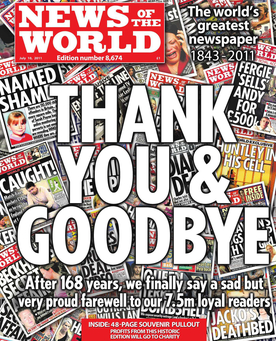
From the early 1990s, News of The World reporters used illegal and shady methods of investigation while seeking out stories, these included police bribery, hacking of voicemails and monitoring of calls, phone theft and use of private investigators to access such information from public figures, celebrities, politicians and even the Royal Family.
On the 21st of March 2002, schoolgirl Milly Dowler was reported missing in Surrey after failing to return home from school that day. On the 18th of September 2002, Milly’s remains were found despite her family having been given false hope that she was still alive due to activity on her phone’s voicemail service. It was later revealed in 2011, when reports by The Guardian showed that Milly’s voicemail activity after her disappearance, was down to phone hacking by News of The World, during Rebekah Brooke’s time as editor.
The scandal also targeted the British royal family, primarily taking place between 2005 and 2007, the paper used a private investigator to intercept voicemails of those in and around the royals. Suspicion arose in 2005 after an article was published by the paper detailing private arrangements and details made between Prince William and ITV’s royal correspondent, Tom Bradby. The paper had also published information about an appointment the Prince had made, both of which had never been mentioned in the public eye.
The outbreak of the royal phone hacking scandal led to the resignation of editor at the time, Andy Coulson and the arrests of the paper’s royal editor Clive Goodman, and private investigator Glen Mulcaire, in 2006. The paper also targeted Prince Harry and Catherine, Princess of Wales on numerous occasions. Prince Harry has since gone on to bring legal action against News of The World and its ‘sister paper’ The Sun, after Clive Goodman had previously claimed to have hacked Prince Harry’s phone on 9 occasions.
In 2025, Prince Harry was offered a “full and unequivocal” apology by News Group Newspapers (NGN) for actions of The Sun newspaper, and News of The World’s use of private investigators in a “serious invasion of privacy” for phone hacking, the case was settled for reported damages of £10m back in January. More than 1,600 people affected by the phone hacking/ tapping scandal between that time period have now reached out of court settlements with News of The World, including Prince William and star of The Hack, David Tennant.
The aftermath of the scandal and accusations of similar behaviour at papers like The Sun, led to a public outcry with a feeling of mistrust in British journalism, one that can still be felt to this day with many of Murdoch’s papers and British tabloid journalism. The case of Milly Dowler and several others opened a doorway to numerous investigations into phone hacking and the tactics used by newspapers.
Why ethical journalism and integrity is so important – in an age where it is increasingly threatened
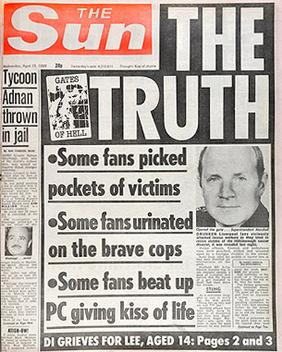
In the age of AI, journalistic integrity is more threatened than ever, not just in the UK but worldwide and at a time when so many papers are still working to fix their reputation the last thing they can afford is to lose the public’s trust any more than they already have. For instance, in Liverpool, The Sun newspaper is still widely boycotted and looked down upon by a majority of the city, 36 years after the paper’s shameful editorial coverage of the Hillsborough disaster in 1989, accusing fans and police of being at fault, and its widely condemned portrayal of the people of Liverpool and the teams supporters.
Artificial Intelligence poses a significant threat to journalism in the modern day, putting trustworthy news and information as-well as jobs at risk. The ability to create extremely convincing deepfakes such as imagery, videos, text etc, has widely contributed to a rise in misinformation in modern day media. In November 2023, a deepfake audio of London mayor, Sadiq Khan calling for pro-Palestine marches, planned for the same time as Remembrance weekend, to take priority widely circulated on social media. The clip also appeared to show Sadiq Khan claiming to control the Met Police and that they would do as he said. When the audio went into circulation, there was an increase in hateful far-right groups commenting on the mayor and causing near-serious consequences at an already high time of political tension between the mayor and then Prime Minister, Rishi Sunak.
The use of AI in journalism has also raised the question of quality, with less human influence and accountability to keep the emotional, in-depth reporting that journalism sees today. However, it isn’t the only current threat to ethical journalism, a number of other risks include the current political climate across the world and a decline in local news.
The political climate has always played an important role in the media’s ability to report freely and hold governments, public officials and organisations to account in a democracy. In recent years the threat to democracy and freedom of speech from the rise of the far-right has called ethical journalism into account, leaving us to reflect on who can be trusted.
In Reporters Without Borders annual global press freedom index for 2025, it was reported that global press freedom was at an unprecedented all time low with a significant decline in democratic countries. Contributing factors across the world include, a decline in global democracy, economic pressure in the industry such as rising costs for independent press and local news distribution, and geographical impact such as press limitations in conflict zones and the catastrophic loss of journalists in Gaza, where its believed at least 248 Palestinian journalists have been killed since October 2023 – according to the United Nations OHCHR.
The Hack is available to watch on ITVX and the STV player in Scotland


