


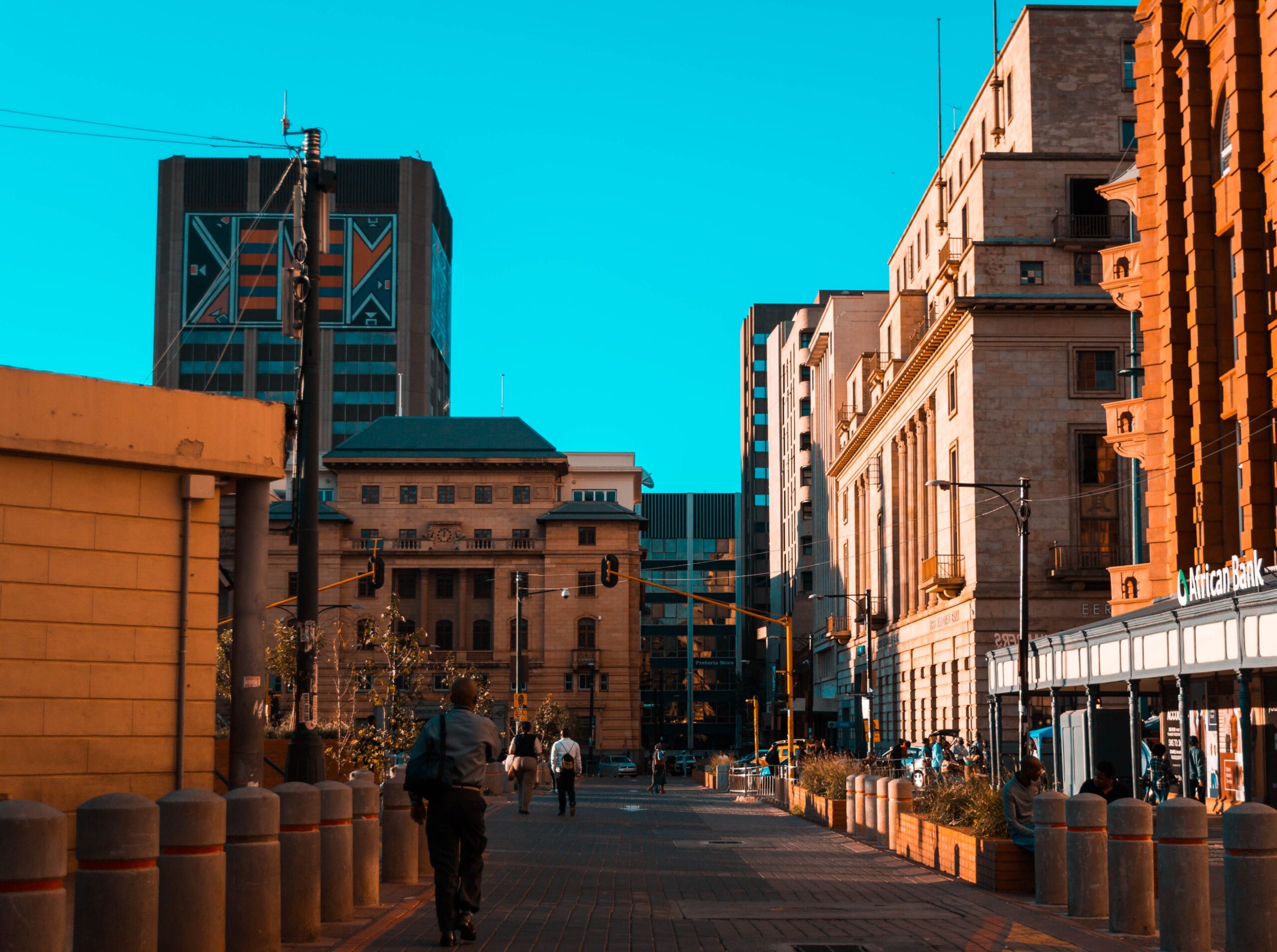
Johannesburg: the poster child for sceptics of the Rainbow Nation. The so-called case in point of where democratic South Africa has gone wrong. Despite recent regeneration projects, the city, long plagued by inner-city decay and poverty, has struggled to shake off its urban, crime-ridden moniker. The ANC, the party which has run South Africa since the first free elections in 1994, has failed in many eyes to implement that constitution which underpins South Africa – one built on equality, dignity and democracy. Dignity and equality for all still seems a hollow promise in a city which boasts the richest square mile in Africa within a golf swing’s distance of townships like Alexandra, where more than 64% of the population live in extreme poverty. As the 4th of November mayoral elections loom, the task to fix the city where the taps are figuratively and literally running dry has never seemed bigger.
Into the municipal ring has stepped Helen Zille, the mayoral candidate for the Democratic Alliance, the second biggest party in the National Assembly after the ANC. The DA can trace its roots to the Progressive Party, the official anti-apartheid opposition during the era of white minority rule. Zille’s “Blue Squad”, her crack team of street activists performing clean ups of the city are leading a campaign based on filling potholes and fighting corruption. Focusing on the poor infrastructure and the day to day regeneration of the city, which they say has been left to ruin seem to be working well with voters . Recent polls show the DA could become the biggest party in the mayoral election this November – a result that would be catastrophic for the ANC.
Losing South Africa’s economic and cultural hub would have been unthinkable 20 years ago. Helen Zille, a white South African, becoming mayor would be a significant turn of events in the new South Africa, though the ramifications are not yet clear. Would this mark a true ushering in of the non-racialised society Nelson Mandela dreamed of; or are the DA, who want to reverse the Black Economic Empowerment policies Mandela championed, an obstacle to ongoing racial equality? Has the nation outgrown these laws, or does structural apartheid persist as a defining issue? Debate has long swirled around the 75 year old Johannesburg born Zille, whose background as an activist against apartheid has not shielded her in the free south africa from race based controversies. Zille has previously claimed there are more “racial laws in South Africa today than during apartheid”, a statement widely condemned across political divides, even by the then-leader of the DA, John Steenhuisen.
Traditionally, Black South Africans are not fond of the DA, viewing it as representing the interests of white and Indian communities more than the Black majority. This is a perception the DA will have to shake if it ever wants to win a national election, but if they take Johannesburg, it would be seen as a statement that they are managing to overcome, or at least cope with, this characterisation. They already control the Western Cape, including South Africa’s second-biggest city, Cape Town; a win in Joburg would represent a seismic shift in the political landscape.
It is not a newfound love of the DA that is growing in the Black community, but increasing dissatisfaction with the ANC. Unlike older generations, young Black South Africans of the “born-free” generation do not hold the ANC up as untouchable liberators. In comparing the infrastructure of Johannesburg to that of Cape Town, the latter appears a much more well-managed city, with better roads and amenities and, in the wealthier areas, a much stronger perception of safety. This has led many Joburg residents to indicate an intention to “hold their noses” and vote DA in order to rid the city of the ANC rule that they say has let it down.
This pull away from the ANC has not only benefited the DA. The Patriotic Alliance has swept up support on the wave of anti-immigration sentiment sweeping the country. Meanwhile, controversial Pan-Africanist Marxist Julius Malema and the red-beret clad supporters of his party, the Economic Freedom Fighters, remain fiercely the voice of true decolonisation, full land redistribution, open borders and a fully nationalised state – engaging the grassroots Black nationalists whose support the ANC once would have taken as a given.
These smaller parties may well be left as the kingmakers in the Joburg mayoral election, as it is unlikely that either the DA or the ANC will reach the 50 percent majority needed to run the city alone. Although many are increasingly reluctant to prop up the ANC, several are also sceptical of the DA. It adds another interesting dynamic to the contest. We can expect some reluctant vows one way or another in what will likely be a marriage of convenience between multiple parties to allow Zille or the ANC candidate (who at the time of writing remains unselected, with less than three weeks until polling day) to become mayor.
This splintering of ANC support coincides with multiple financial and institutional scandals in the party, which current South African President Cyril Ramaphosa has vowed to tackle. Many internal investigations have been conducted as required, but the information they revealed regarding corruption and institutional rot does not reflect well on the ANC’s recent record; not to mention incidents such as the “Farmgate” scandal, which directly implicated Ramaphosa himself benefiting from illegitimate foreign money.
Losing Johannesburg would be a stark signal that the ANC, already forced into a power sharing coalition at the last national elections, can no longer take its supremacy for granted even in its heartlands. For the DA, winning the mayorship would demonstrate that the party may have the credentials to one day govern South Africa – not on the promise of hope, but on the premise of stability. Whether they can implement the successes of Cape Town on a wider scale remains to be seen, but Helen Zille’s “Blue Squad” is getting ready to fix the “city of gold” one pothole at a time.


