


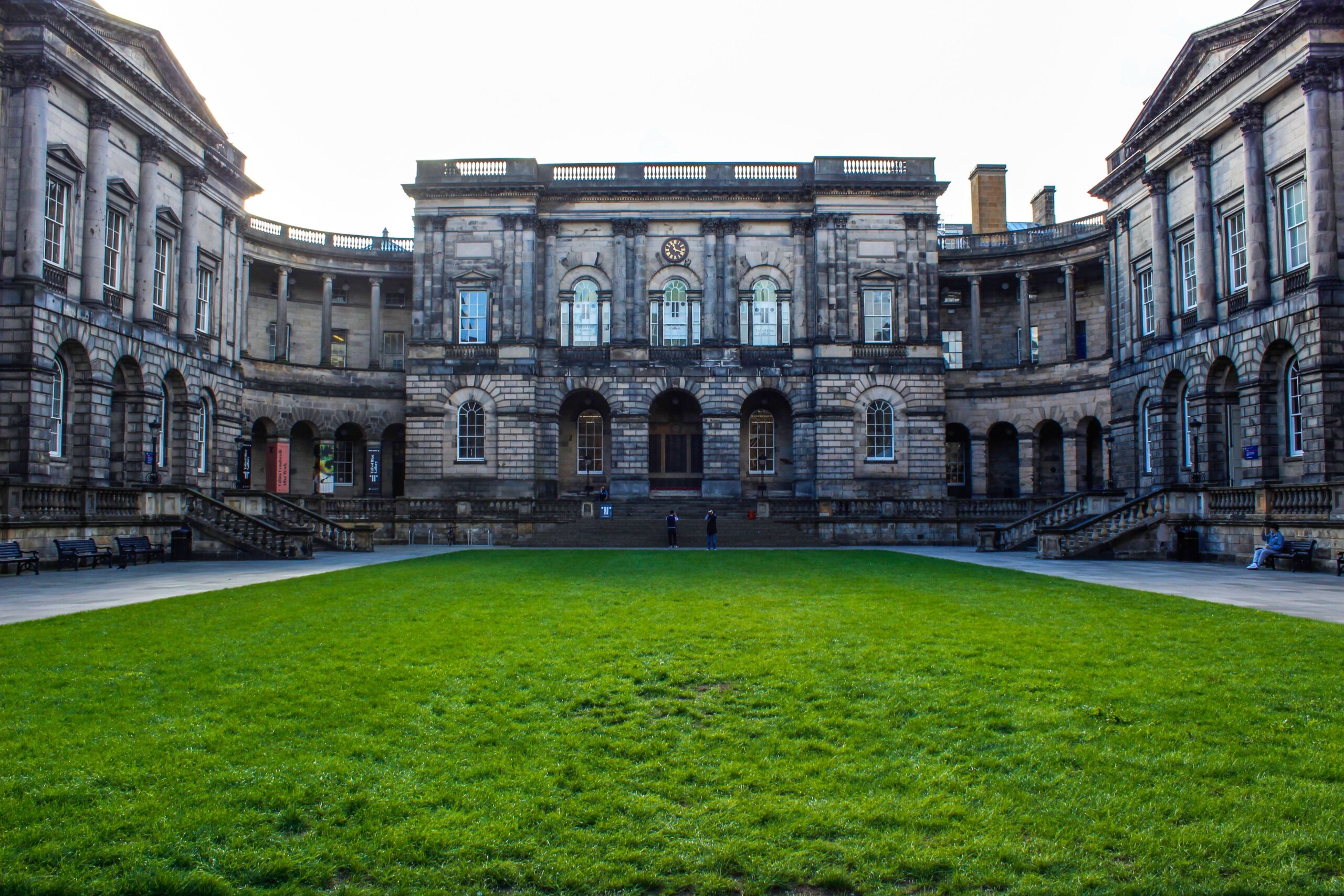
After further strike action, the University of Edinburgh announced plans to phase out over 90 degrees, including arts and languages courses, and close admissions to new applicants from 2027.
Starting September 28th, lecturers and staff at Edinburgh University are due to strike for 25 days over five weeks in an ongoing dispute over the risk of compulsory redundancies.
The University and College Union estimates there are around 1,800 jobs at risk as a result of mismanagement and refusal to divest. The action follows on from that of the last academic year after the university’s president, Professor Sir Peter Mathieson, announced £140m cuts in early 2025.
In a statement from September 18th via the University and College Union Edinburgh website, the trade union spoke of cuts to programmes saying, “This week…managers surprised staff in many Schools across the University with detailed announcements about imminent Programme closures – 90 in total, so far.” The announcement has been met with mass outrage from both staff and students as well as fields affected by the cuts.
The planned degree suspensions overwhelmingly target the universities School of Literatures, Languages and Cultures (LLC), with the loss of 48 programmes alongside three arts degrees and programme closures across the School of Education and Sport, School of Philosophy, Psychology and Language Sciences, and the School of Social and Political Science.
The University of Edinburgh’s Scottish Society took to Instagram shortly after the announcement stating their views on the proposed seven programmes being cut in the Celtic and Scottish Studies Department,
“This is unacceptable. Disembowelling Celtic and Scottish Studies at a Scottish University constitutes cultural and linguistic erasure. Many culture and language courses are also under threat, all the while students and staff are forced to work and study under uncertainty.”
Universities across Scotland have faced a period of uncertainty since the Covid-19 pandemic, with a decrease in the number of paying international students, financial troubles and redundancies across the board. It isn’t unusual for universities to make degree cuts during these periods; however, arts and humanities degrees seem to be taking the brunt.
Following a multi-million-pound deficit at the University of Dundee that plunged the institution into a period of financial uncertainty, redundancies and industrial action, it was announced over the summer that the university planned to suspend all philosophy-related programmes for 27/28 entry with the exception of three joint philosophy degrees. Language programmes at Dundee will also face suspensions.
The university had also proposed cuts to the mathematics programme however, following consultations, the course was saved until the proposed development of a new mathematics programme in 2028.
While the University of Edinburgh and the University of Dundee have been the most high-profile cases in degree cuts, the University of Aberdeen announced plans in 2023 to fold modern languages degrees as a result of the schools ‘grave financial situation’. The plans included the closure of single honours in French, Gaelic, German and Spanish and the proposed closure of joint honours; however, they have since been saved.
As of July 2026, an estimated 4,000 academic posts covering social sciences, the arts and humanities had been cut in the past year at UK universities. According to The Guardian, the majority of these cuts happened at non-Russell Group universities, placing students at a disadvantage in quality of teaching, training and materials.
The University of Aberdeen said that the cuts were made after a “steep fall in the number of students”, a decision that has since been found to have been ‘hurried’, ‘unstructured’ and dominated by finances in a 2025 review. The same excuses are now made by Edinburgh University in the case of their programme closures.
A 2025 report by The British Academy titled, Measuring SHAPE Graduate Outcomes, found that SHAPE (Social Sciences, Humanities and the Arts for People and the Economy) graduates develop a vital knowledge and skill set that are in high demand in today’s workplace, supporting sectors across the UK economy.
It also found that such graduates were well equipped to deal with modern societal & workplace challenges such as climate change and the rise of AI – while these are areas typically demanding of a STEM background, the skills developed by SHAPE graduates are essential in contributing critical thinking, human experience and human consequences to a society focused on technical training.
Universities, institutions and governments are often the first to jump to their defence, reiterating the importance of art, culture and the humanities in our society, helping to shape the world we live in today and the people we become. However, they are also among the first to cut such funding and programmes at the slightest mention of financial difficulty.
These degrees have long been looked down upon in the arguments for higher education & under-appreciated in wider society. The popularisation of the term ‘Mickey Mouse degree’ has added to this distaste for programmes outside of technical training, deemed “frivolous”, “low value” and to be of “poor earning potential”.
The report found that 87% of SHAPE graduates were in employment in 2023, compared to 88% of STEM students. The British Academy acknowledged that data on graduate outcomes are a “short-term measure of our economy” and therefore not an accurate measurement for the value of a degree.
The discussion now needs to shift from valuing degrees by societal opinions and views of their worth and instead ask ourselves how universities and institutions can move forward and recover from their lack of arts and humanities.
Heading into a world where advancing AI technology and the rise of the far right pose such a threat to the human experience, sustainability and the way we communicate, we cannot under appreciate the importance of such values and allow ourselves to be diminished to countries, contents and a world with ‘one language and ‘one culture’.
To show a complete ignorance towards history and the erasure of culture creates a very dim future for man kind. The return of the Trump administration brought outrage and condemnation after nearly 596 books were pulled from Department of Defence Schools in a targeted censorship campaign against themes of race, Feminism and democracy.

When access to education on such topics is removed, we are limiting free thinking, creating a society of one belief and isolating marginalised voices and stories, as George Santayana said, “Those who cannot remember the past are condemned to repeat it”.


