


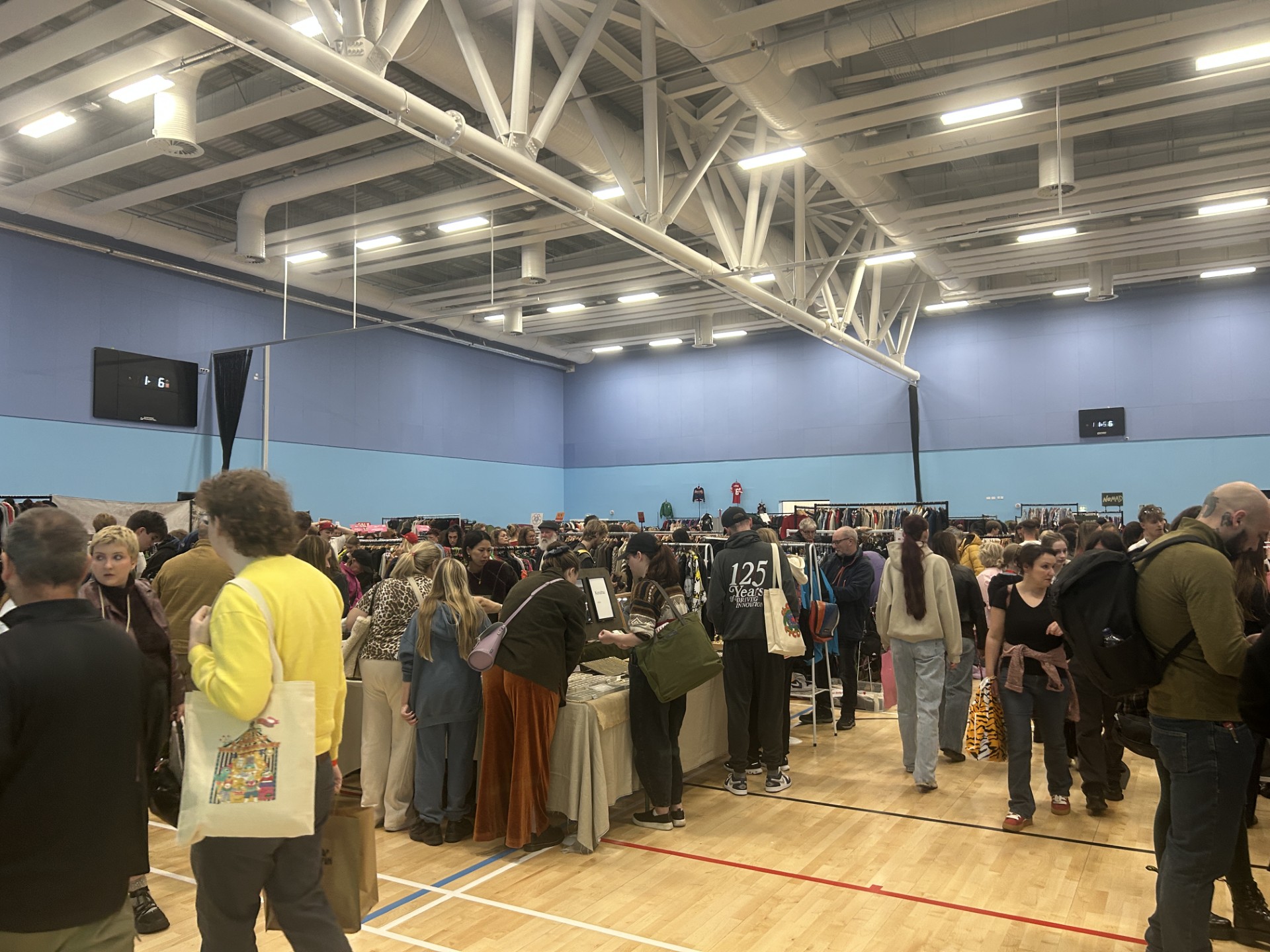
The Meadowbank Sports Centre came to life on September 28th, welcoming Clothes Cycle, the UK’s largest thrift market.
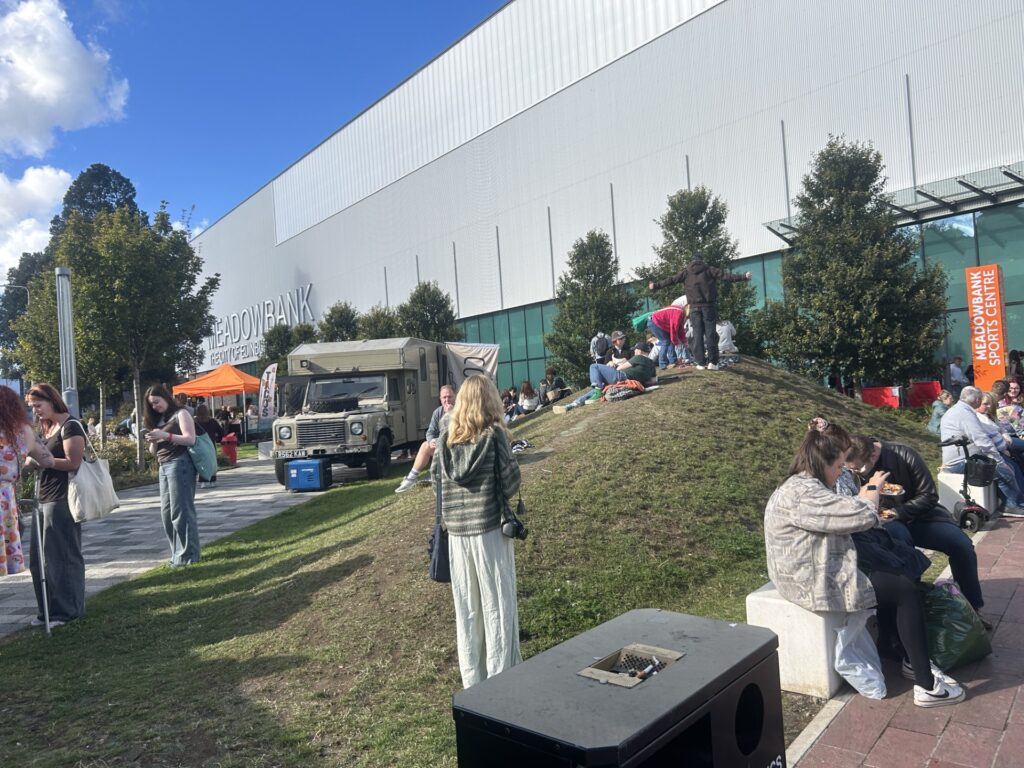
The centre’s large gym spaces were jam-packed with second-hand clothes – racks, bins, and piles full. From the building’s imposing doors poured a steady stream of customers sporting artfully dyed hair and precisely styled outfits, seeking to add to their wardrobe. Even the outside of the building was occupied, with food trucks lining the grassy space full of lounging shoppers, seeking a respite from the chaos inside. Lucky for them, the market lasted from 11 am until 5 pm, plenty of time to relax in between thrifting.
Clothes Cycle markets promote sustainable and affordable fashion by giving second-hand businesses the opportunity to come together and reach a wide network of customers.
“It’s one of the best events for vintage and sustainable clothing,” said vendor Ewelina Gepert, who owns Ūnik Upcycle.
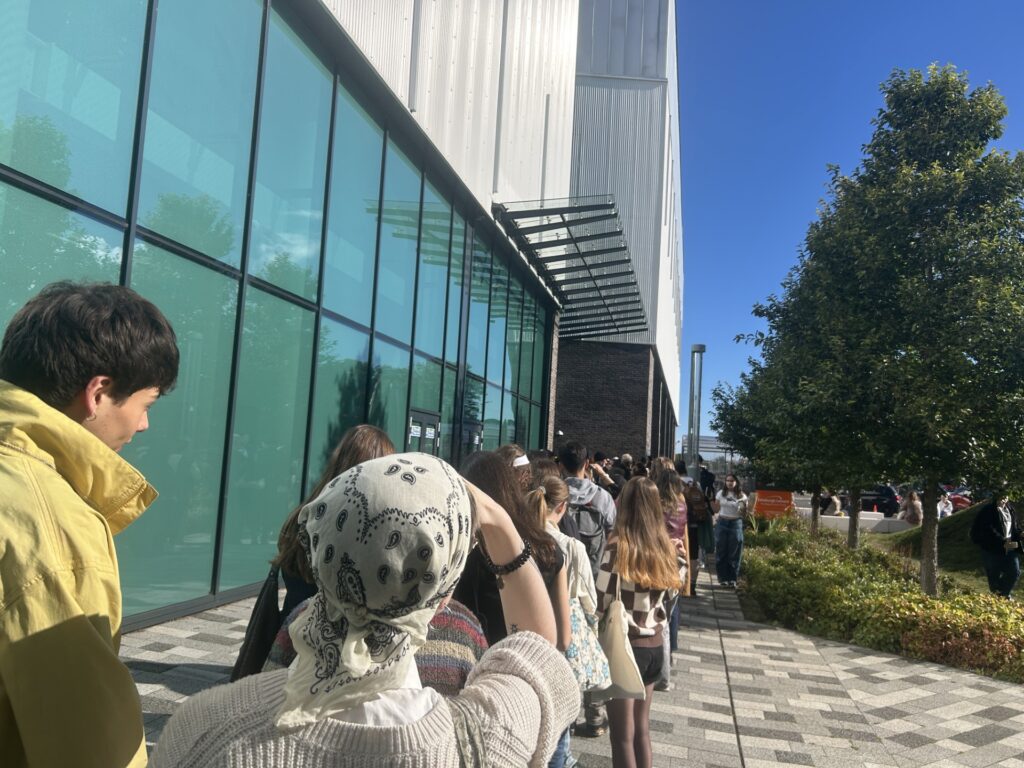
The market’s stop in Edinburgh featured over 100 sellers, but not only of clothing. Nail, tooth gem and tattoo artists could also be found at the event.
“It’s to encourage local business and other sorts of small businesses to get involved,” said event volunteer Olivia Latimer.
Customers could also participate in a clothes swap, where they brought in up to five unwanted pieces of clothing in exchange for tokens, which could be used to purchase select items.
This was one of Latimer’s favourite aspects of the event, “It’s a nice sense of community and conviviality, which you don’t really see down the high street.”
Gepert said she wished Edinburgh had a larger market for vintage and upcycled clothing, as it is a predominantly student city, hosting five universities.
According to ECDB, an e-commerce analytics website, Gen Z and millennials are the most likely demographic to have bought second-hand clothing in the past year.
Sophie Corvette, the owner of vintage shop SRTD in Stirling, said that while the thrifting population can be diverse, she typically finds that women are more interested in it than the guys.
While the majority of customers rifling through the market’s many offerings were in fact women, there were a few men on board.
University student, Joseph George entered the event at noon. He came to find pieces to add to his sparse wardrobe, he said “I’m definitely looking for more vintage pieces, but it just depends on the price. As a student, I don’t have much money.”
Purchasing second-hand fashion is not only less expensive, it’s also more sustainable, said customer Maria Mendozas. “I think it’s just better to go thrifting than regular shopping because fast fashion is pretty damaging for the environment.”
According to The Guardian, 10% to 40% of clothes manufactured each year are unsold, creating environmental damage due to the carbon emissions required to make the clothes and the physical pile up of unwanted garments in landfill sites.
Being clothes-conscious is important to Clothes Cycle. The organisation partners with like-minded small businesses looking to promote fashion sustainability and the welcoming culture that surrounds it.
The most recent market in Edinburgh was twice the size of previous years, marking an increased interest in sustainability in the city. According to The Co–operative Bank, Edinburgh is the 18th most popular city in the UK to thrift in, following a general growth trend for second-hand shopping in the UK.


